
Pepper by SoftBank Robotics The Social Humanoid That Defined an Era
Pepper was not built to lift boxes. Its importance came from making social robotics visible in public spaces.
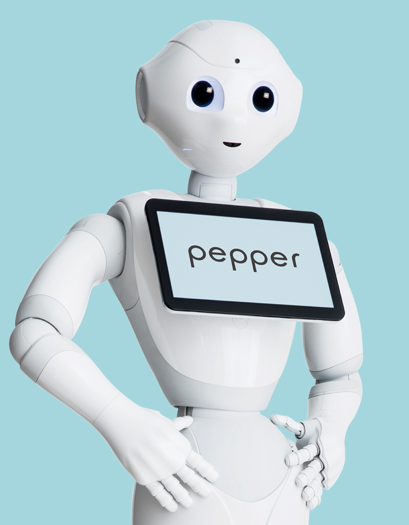
Pepper shaped social-robot design through speech, gestures and a chest display. This review covers its real use cases, interaction limits and continuing research value.
Pepper is one of the most recognizable social humanoid robots.
The robot is associated with SoftBank Robotics and Aldebaran’s French robotics history.
Its design centered on interaction, gestures, speech and a chest tablet.
Pepper matters most as an HRI platform, not as an industrial worker.
Original X post
Open on XLoading the full X post…
What happened
The TechniaHQRobot post revisits Pepper as a different kind of humanoid robot. Pepper was built around communication, not warehouse lifting or factory picking.
That distinction matters. Pepper’s role was to make a robot approachable in front of customers, students, patients, visitors and researchers.
Why it matters
Pepper helped define what human-robot interaction looked like before the current physical AI wave. The robot had a recognizable face, expressive arms, a chest tablet and a small body that could move indoors.
It became a public symbol of social robotics because people could understand its purpose at a glance greet, explain, guide, entertain and support interaction.
Technical details
- Robot / Project
- Pepper
- Company / Lab
- SoftBank Robotics / Aldebaran history
- Country
- France / Japan history
- Main task
- social interaction, education, reception and HRI research
- Hardware details
- 121 cm and 28 kg are commonly cited public specifications; chest tablet and expressive arms are central to the design
- Sensors
- cameras, microphones and depth sensing are part of the public Pepper hardware description
- Mobility
- wheeled base with omnidirectional movement on flat floors
- Hands / gripper
- expressive hands, not heavy manipulation grippers
- Deployment environment
- shops, schools, events, research labs and public-facing settings
- Autonomy level
- scripted interaction, apps and supervised research systems; not a general autonomous worker
- Confirmed limitations
- limited manipulation, limited mobility terrain, speech and interaction reliability in noisy public settings
Technical details
Pepper’s public design is centered on indoor interaction. The chest tablet gives it a visual interface. The head carries cameras, microphones and depth sensing. The arms create expressive gestures. The base uses omnidirectional wheels for flat floors.
This design makes sense for HRI. It does not make Pepper a heavy-duty humanoid worker. The robot is better understood as a social interface on a mobile base.
Use cases
Pepper has been used in education, research, retail-style demonstrations, visitor interaction and human-robot interaction studies. Its best use is structured communication in controlled public spaces.
It is also valuable as a research platform because students and labs can test dialogue, navigation, perception add-ons and social behavior without building a humanoid from scratch.
Limitations
Pepper’s limitations are clear. It is not built for rough terrain, heavy manipulation or industrial handling. Its public usefulness depends on speech recognition, software quality and whether people actually want to interact with a robot in that context.
That is why Pepper still matters historically, even if newer humanoids now dominate attention. It showed both the promise and the limits of social robotics.
What to watch next
Watch for research that upgrades Pepper with modern AI, better perception and lower-latency speech interaction. The hardware is older, but the platform still appears in HRI work because it is familiar and accessible.
The next question is whether social robots become standalone products again or whether their lessons get absorbed into newer humanoids and service robots.
Related robotics context
Pepper connects French robotics history, Japanese SoftBank distribution and the global human-robot interaction community. It is a reminder that a humanoid robot can matter even when it is not a bipedal factory worker.
Explore the technical topic
Share this article
Share the current TechniaHQRobot article page.
Sources
By @techniahqrobot
About the publication · Sources and editorial policy · Report a correction