

Introduction
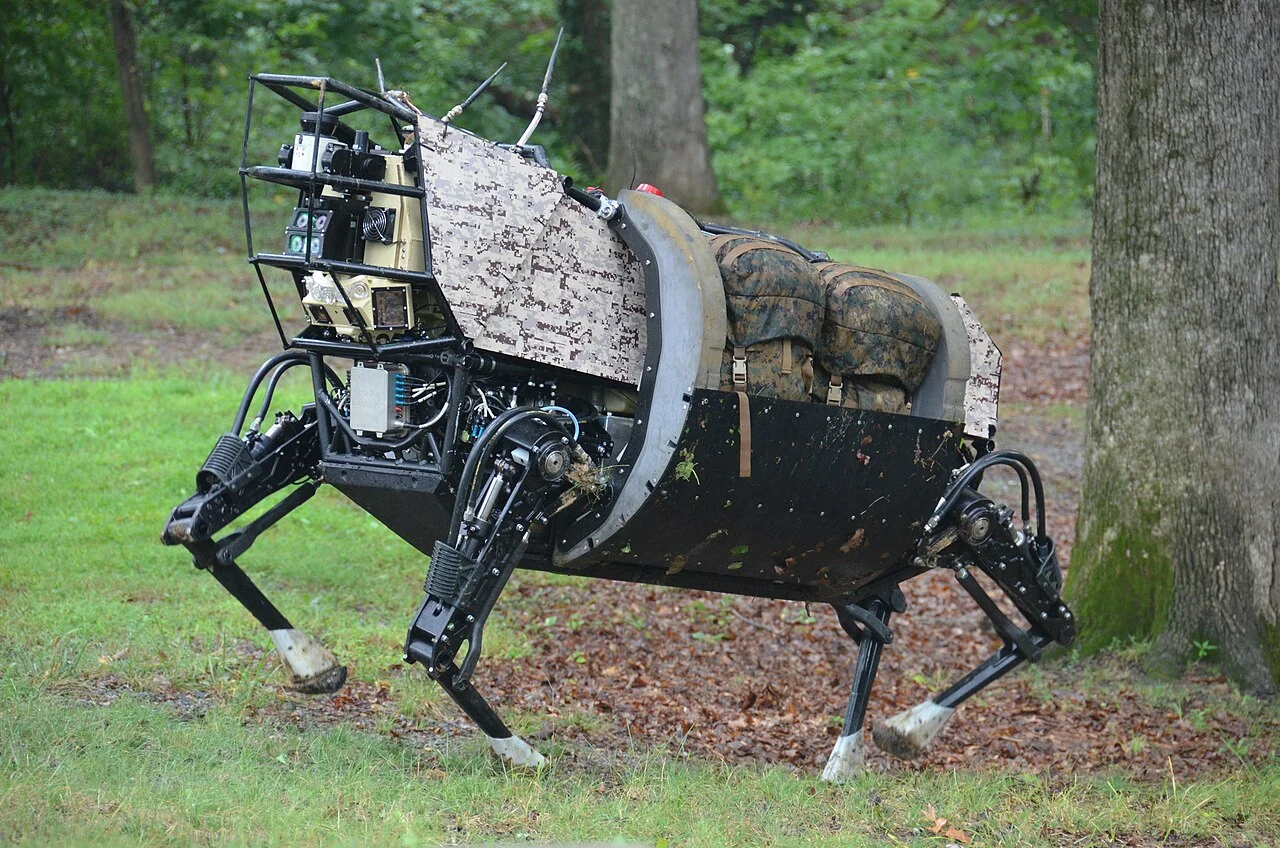
A wheeled robot that loses motor power usually rolls or stops. A quadruped can collapse. A robot dog that self-rights can then sweep its legs through a large volume as it tries to stand. That mechanical difference changes how operators should think about exclusion zones, payloads, stairs, E-stops and recovery.
Boston Dynamics’ own developer guidance is unusually concrete payload position changes Spot’s ability to self-right, leg motion can extend above the robot’s back, and choreography guidance calls for at least three meters of clearance because unstable motions can increase fall and collision risk. These are better starting points than treating a quadruped as a mobile camera tripod.
Key findings
- Quadruped safety must account for the fall envelope and the leg sweep during sit, stand and self-righting, not just the nominal body footprint.
- Boston Dynamics says Spot can self-right, but payload geometry and a high center of mass can interfere with that behavior.
- An E-stop removes or inhibits motor authority; on a legged robot, removing torque can itself lead to a controlled sit or physical collapse depending on state and implementation.
- Payloads change agility, center of mass, self-righting and collision geometry, so a safe base robot can become a different system after integration.
- Autonomous navigation should be validated around stairs, edges, reflective/low-texture terrain, people and communications loss, with a clear human recovery procedure.
Quadruped-specific hazards
| Hazard | Why quadrupeds are different | Control focus |
|---|---|---|
| Fall/collapse | Legs support body; loss of torque changes posture | Fall zone, terrain, recovery procedure |
| Self-righting | Large dynamic leg/body sweep | Clearance and automatic-recovery rules |
| Payload instability | High/offset mass changes balance | COM, mass limits, mechanical clearance |
| Negative obstacles | Edges/holes may be harder than positive obstacles | Route constraints, perception validation |
| Human interaction | Dynamic gait and approach can surprise people | Predictable paths, warnings, speed/proximity rules |
The safety envelope moves with the legs
A quadruped’s feet and knees travel outside the compact torso footprint. During stair climbing, recovery or self-righting, leg segments can sweep upward and outward. Boston Dynamics’ payload design documentation explicitly warns that Spot’s legs may enter areas above the body and contact payloads.
Keep people, cables and fragile equipment outside the full motion envelope during active recovery. A painted rectangle around the torso is not enough.
Falls are a normal design case, not an impossible event
Legged robots operate on stairs, rubble, grating and uneven terrain precisely because those environments challenge wheels. That mobility comes with fall risk. Define what the robot does after slip detection, loss of footing or a full fall, and whether automatic self-righting is enabled.
Inspect feet and joints because wear changes traction. Boston Dynamics warns that worn Spot foot treads can increase the chance of slips and falls. Similar inspection logic applies to other quadrupeds even when component designs differ.
E-stop behavior on a legged robot needs physical interpretation
An emergency stop is not just a software button. It changes motor authority. Boston Dynamics documents a payload safety interlock that can disable motor power; the physical result depends on robot state and can include the robot coming down to the ground.
Operators should know where physical and remote E-stops are, who is allowed to reset them and what area must remain clear before re-enabling motors. Never assume an E-stopped legged robot is mechanically locked in place.
Self-righting creates its own exclusion zone
Spot can usually attempt to right itself after a fall, but Boston Dynamics notes that payload geometry can prevent the maneuver. A top-heavy payload can also reduce agility and self-righting ability.
The safest recovery may be manual power-down rather than immediate self-righting when people or structures are close. Define the conditions that permit automatic recovery and the conditions that require a human to secure the area first.
Payload integration changes center of mass and failure consequences
Thermal cameras, arms, gas detectors and communications masts can raise the center of mass or overhang the body. That changes stability, stair behavior and collision geometry. Boston Dynamics specifies a combined Spot payload capacity and advises keeping the mass centered between the hips and the center of mass low.
A payload also needs mechanical protection from leg contact during unusual poses. Evaluate cable snag, sharp edges and what happens if the robot falls onto the payload.
Edges, stairs and holes are not ordinary obstacles
A perception stack may navigate around boxes successfully and still misjudge a negative obstacle such as a stair edge, pit or missing floor section. Industrial inspection routes should identify fall-critical zones explicitly and use environmental controls where practical.
When a fall could drop the robot onto a lower level, worker or expensive equipment, do not rely only on learned locomotion. Barriers, route constraints and supervised operation can be more reliable risk controls.
Communications loss and autonomous missions
Autonomous quadrupeds can replan around obstacles and execute inspection routes, but sites should define behavior when Wi-Fi/LTE is lost, maps disagree, sensors degrade or the mission times out. The safe response may be stop, sit, return or wait depending on the environment.
Remote control is also not a guarantee of safety latency and poor camera perspective can hide people or edges. The operator interface should expose robot state, battery, faults and E-stop status clearly.
Human factors matter because people react to legged robots differently
Research on human encounters with quadrupeds has measured increased stress during robot encounters and differences based on robot behavior. That does not establish a universal safety distance, but it supports a practical point warning cues, predictable paths and visible operating rules matter in shared spaces.
For public sites, train staff and warn bystanders. Do not surprise people with a fast robot emerging from a blind doorway.
Limitations and missing information
- Product specifications, software capabilities, prices and availability can change; verify the exact configuration before procurement.
- A successful vendor demonstration does not establish production uptime, intervention rate or performance in a different facility.
- Safety guidance here is educational and does not replace a site-specific risk assessment, integrator validation or applicable regulations.
Conclusion
Quadruped safety starts from the machine’s unusual mechanics it can fall, collapse, self-right and sweep four legs through space. Treat those behaviors as normal operating cases and design payloads, routes, E-stop procedures and human zones around them.
Frequently asked questions
Are quadruped robot dogs safe around people?
They can be operated safely under designed procedures, but risk depends on robot mass, speed, payload, terrain, autonomy and proximity. A site-specific risk assessment and manufacturer guidance are still required.
What happens if Boston Dynamics Spot falls?
Spot supports self-righting, but Boston Dynamics notes that payload geometry and a high center of mass can interfere. The recovery area must be clear because the legs move through a large volume.
Does an E-stop make a quadruped stand still?
Do not assume so. E-stop or motor-power removal changes actuator authority; depending on state and design, the robot can sit or come down to the ground. Follow the specific manufacturer procedure.
How do payloads affect robot dog safety?
Payload weight and placement change center of mass, agility, fall behavior, self-righting and the collision envelope. They can also interfere mechanically with leg motion.
What should be included in a quadruped robot risk assessment?
Include falls, self-righting, leg sweep, E-stops, payloads, stairs/edges, autonomous route behavior, communications loss, charging, maintenance and human interaction.
Sources and methodology
Related TechniaHQRobot guides
Share this article
Share the current TechniaHQRobot article page.
Continue reading
Open the latest robotics reporting, Physical AI analysis and hardware notes.