

Introduction
The hardest part of a “robots for sale” list is not finding prices. It is determining what the price means. A store page, refundable deposit, developer edition, monthly subscription, distributor quote and future delivery reservation are six different levels of availability.
This guide labels them separately. Prices below are snapshots verified on August 12, 2026 from manufacturer pages where possible. Shipping, taxes, duties, supported countries and software rights can change, so a price is not treated as proof that a robot can be delivered to every buyer.
Key findings
- Unitree’s official shop lists G1 at $13,500, R1 from $4,900 and H2 at $29,900; the G1 page says the base G1 is backordered and does not support secondary development, directing developers to the EDU edition.
- 1X lists NEO Early Access ownership at $20,000 or a Standard $499/month subscription, with a $200 refundable deposit and U.S. deliveries starting in 2026.
- A public price is not a deployment cost. Shipping, duties, batteries, hands, compute, developer access, support and application integration can add materially.
- “For sale” must be separated from “pre-order,” “quote-only,” “research access” and “announced.”
- For robotics developers, software access can matter more than the cheapest hardware price; consumer configurations may restrict secondary development.
Selected robot sale status verified August 12, 2026
| Robot | Manufacturer price/status | Commercial label | Important caveat |
|---|---|---|---|
| Unitree G1 | $13,500; store page says backordered | Online order | Base version says no secondary development; EDU via sales |
| Unitree R1 | From $4,900 on official humanoid collection | Online store listing | Configuration determines capabilities |
| Unitree H2 | $29,900 on official humanoid collection | Online store listing | Verify region, shipping and configuration |
| 1X NEO | $20,000 ownership or $499/month; $200 refundable deposit | Pre-order / subscription | U.S. deliveries start 2026; capabilities evolve |
Availability labels used in this guide
Online order means the manufacturer exposes a checkout or add-to-cart path. Pre-order means money or a deposit reserves future delivery. Subscription means the buyer pays recurring fees rather than owning the system under the standard plan. Quote-only means the manufacturer or distributor must scope the sale. Research/demo-only means there is no confirmed general purchase path.
These labels protect against a common SEO failure publishing an announced target price as though a customer can buy the machine today.
Unitree unusually transparent public store pricing
Unitree’s official store currently lists several humanoids with public prices G1 at $13,500, R1 from $4,900 and H2 at $29,900. The G1 product page shows an Add to Cart flow, states shipping costs between $300 and $1,200 and says the base unit is backordered.
The same page contains a critical software caveat the base G1 does not support secondary development, and customization requires the EDU edition through sales. A researcher comparing robots by sticker price alone could therefore choose the wrong configuration.
1X NEO ownership, subscription and remote expert support
1X offers two commercial paths on its order page Standard at $499 per month and Early Access ownership at $20,000. The page lists a $200 refundable deposit and says U.S. deliveries start in 2026.
NEO’s product page also describes “Scheduled Expert Mode” for complex tasks the robot does not yet know, where a 1X expert can remotely supervise actions at scheduled times. That detail belongs next to the price because it defines the autonomy and service model the customer is buying.
Quadrupeds easier to buy, but configuration changes the number
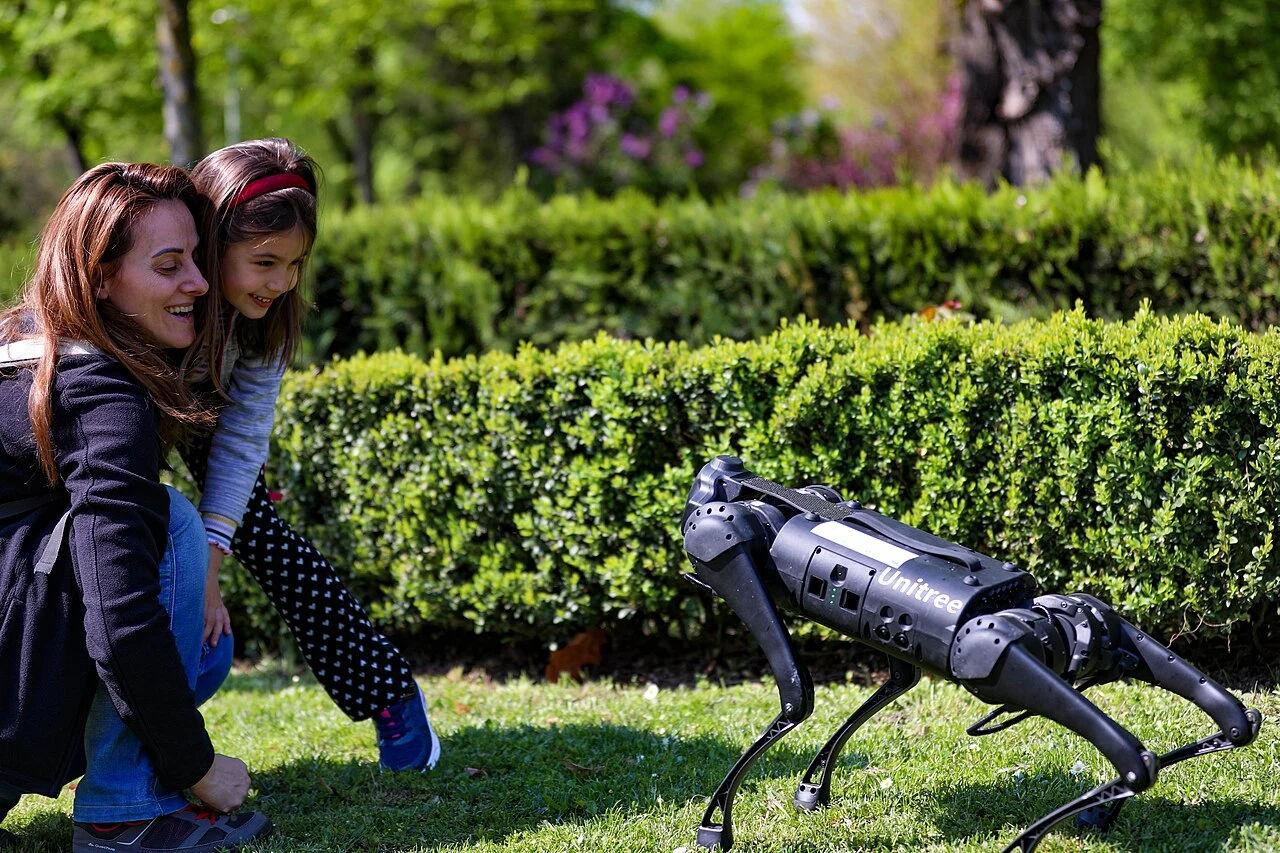
Quadruped robots have a more established developer and inspection market than home humanoids. Unitree sells multiple robot-dog platforms through its store, but variants differ in compute, sensors, controllers, batteries and software access. Distributor pricing can also differ from manufacturer base pricing.
For industrial inspection, a bare mobile base is rarely the complete system. Thermal cameras, gas sensors, charging docks, autonomy software, communications and ruggedization can dominate the mission cost.
Why the cheapest humanoid may be the wrong developer platform
Researchers need to check API access, joint control modes, SDK licensing, onboard compute, hand interfaces, safety limits, simulation assets and whether low-level control is exposed. A consumer product may deliberately lock those interfaces.
Also ask which hands are included. A humanoid price with simple grippers is not comparable to a platform sold with force-controlled multi-finger hands. Battery count and charger strategy matter for continuous experiments.
The real acquisition cost
Build a landed-cost sheet with robot price, shipping, duties/taxes, spare batteries, charger, end effectors/hands, compute, sensor payloads, development license, safety equipment, insurance, facility preparation and support. Then add staff time for integration and maintenance.
For a commercial deployment, compare cost per completed task or productive hour rather than purchase price. A $5,000 research platform and a $100,000 industrial system do not solve the same reliability problem.
A buyer verification checklist
- Is the price on the manufacturer’s current site or only on a reseller/blog?
- Is it an online order, deposit, subscription or quote?
- What exact configuration, hands, sensors and batteries are included?
- Does the version expose the SDK and control interfaces you need?
- What countries are supported and who handles customs/import compliance?
- What is the stated delivery status or lead time?
- What warranty, spare parts and technical support are included?
Limitations and missing information
- Product specifications, software capabilities, prices and availability can change; verify the exact configuration before procurement.
- A successful vendor demonstration does not establish production uptime, intervention rate or performance in a different facility.
- Safety guidance here is educational and does not replace a site-specific risk assessment, integrator validation or applicable regulations.
Conclusion
In 2026, robots are genuinely becoming easier to buy, but “available” is still a technical and commercial status, not a marketing adjective. Verify the configuration and delivery path before comparing prices.
Frequently asked questions
Can you buy a humanoid robot in 2026?
Yes, some models have public purchase or pre-order paths. Unitree lists multiple humanoids in its official store, while 1X accepts NEO orders through ownership or subscription options. Availability and country support vary.
How much is a Unitree G1 in 2026?
Unitree’s official shop listed the base G1 at $13,500 on August 12, 2026, plus shipping. The page also said it was backordered and that the base version does not support secondary development.
How much does 1X NEO cost?
1X lists $20,000 for Early Access ownership or $499/month for its Standard subscription, with a $200 refundable deposit. U.S. deliveries are stated to start in 2026.
Why are reseller robot prices different from manufacturer prices?
Resellers may include shipping, duties, local support, upgraded configurations, compute, sensors or margins. Always compare the exact variant and included services.
What should a robotics developer check before buying a humanoid?
Verify SDK access, low-level control, included hands, compute, sensors, battery strategy, simulator/URDF assets, warranty and whether the specific edition permits secondary development.
Sources and methodology
Related TechniaHQRobot guides
Share this article
Share the current TechniaHQRobot article page.
Continue reading
Open the latest robotics reporting, Physical AI analysis and hardware notes.