
Introduction
On September 24, AGIBOT said the 20,000th robot to roll off its production line was delivered to Chimelong Group. The milestone unit was an A3 Ultra. The count is useful because AGIBOT has published several production checkpoints that show how its manufacturing pace changed from prototypes to five-digit output.
The number needs careful interpretation. AGIBOT describes a cumulative production milestone across its robot portfolio, rather than 20,000 A3 Ultra units or 20,000 humanoids of one model. The company has not published an audited model-by-model breakdown for the full count. A production milestone also does not show how many machines are active at customer sites, how many hours they work, or how much human support they require.
Information verified from official sources available as of September 26, 2026.
AgiBot production milestones reported by the company
| Milestone | Reported date | Interpretation |
|---|---|---|
| 6 prototypes | 2023 | Early prototype output |
| Scale production begins | August 2024 | Start of the reported production ramp |
| 1,000 units | January 2025 | First four-digit cumulative milestone |
| 5,000 units | End of 2025 | Cumulative embodied AI robot production |
| 10,000 units | March 2026 | Five-digit cumulative milestone |
| 15,000 units | June 28, 2026 | Cumulative production milestone |
| 20,000 units | September 24, 2026 | Cumulative production milestone; unit 20,000 was an A3 Ultra |
Dates and counts are company-reported milestones compiled from AGIBOT releases and cited reporting. They are not an independently audited shipment series.
The published milestones show a faster factory ramp
AgiBot says it built six prototype machines in 2023, began scale production in August 2024, passed 1,000 units in January 2025 and reached 5,000 by the end of 2025. The company then reported 10,000 units in March 2026, 15,000 by June 28 and 20,000 on September 24.
The jump from 15,000 to 20,000 spans about 88 days. An even distribution across that interval would equal about 57 units per day. Real factory output varies by day, so this is arithmetic from two cumulative milestones rather than a measured daily production rate.
Readers comparing manufacturers should keep four measures separate: units produced, units shipped, units accepted by customers and units operating in paid work. Combining them can make one company's production count appear comparable with another company's delivery count when the definitions differ.
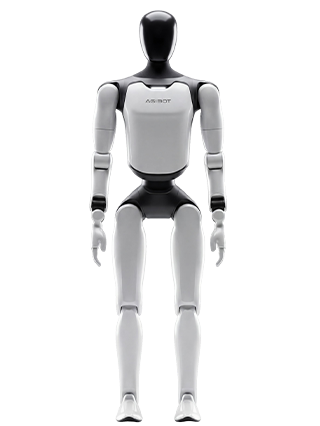
A3 Ultra is designed for long public-service deployments
AgiBot's product page lists the A3 Ultra at 174 cm tall with a 700 TOPS onboard computing platform. Positioning combines indoor UWB and outdoor RTK, with the company specifying accuracy below plus or minus one centimetre under supported conditions. The robot can use omnidirectional tactile hands with 20 degrees of freedom.
The sensing stack includes RGB-D cameras, binocular interaction cameras and three wide-angle fisheye cameras. AgiBot also lists autonomous box entry and exit for deployment, unattended operations features and LinkBots coordination for groups of up to hundreds of units.
Those specifications describe hardware and deployment tooling. Public operation adds moving people, blocked paths, changing lighting, network interruptions, battery scheduling and repeated conversations. Those conditions require separate field measurements.
Production scale should be paired with acceptance data
A buyer can ask for three counts for the same period: robots leaving the factory, robots accepted at customer sites and robots entering routine operation. The gap between those counts can reveal installation work, commissioning delays and units waiting for integration.
A useful fleet record also includes operating hours, human interventions, fault categories and mean time to recovery. A robot physically present at a site can still require frequent assistance, so presence alone is a weak deployment metric.
AgiBot's 20,000-unit milestone gives a concrete manufacturing checkpoint. The next useful public evidence would connect that factory output to customer acceptance and repeatable hours of work across several deployment types.
Limitations and missing information
- The 20,000 figure is a cumulative robot production milestone reported by AGIBOT across its portfolio. Public sources do not provide an audited model-by-model breakdown for the full count.
- Production output should not be treated as customer deployment, paid utilization or autonomous operating hours.
Sources and methodology
Share this article
Share the current TechniaHQRobot article page.
Continue reading
Open the latest robotics reporting, Physical AI analysis and hardware notes.