
Disclosure. TechniaHQRobot has a commercial relationship with AGIBOT.
Introduction
A robot sharing a stage with people has to fit into their timing. Someone finishes a sentence. Another person starts speaking. A gesture can arrive too late or continue after the conversation has moved on.
That timing is what catches my attention in AGIBOT's description of A3 in Macao. The robot was presented as following the exchange while coordinating its voice and body. The technical question is how those outputs stay connected as new speech arrives.
Original X post
Open on XLoading the full X post…
A conversation inside a stage performance
AGIBOT says A3 interacted with celebrities at the Greater Bay Area Film Concert in Macao. Its event post identifies WITA-Omni as the system behind the robot's perception and responses. The account describes coordinated speech, movement and expression during the exchange.
The embedded TechniaHQRobot post lets readers return to the sequence while reading this article. Watch when the robot begins its response and how its movements relate to that response. Those are useful details to examine before drawing conclusions about the whole system.
The event description establishes the setting and the company's account of the interaction. It does not establish how much of the exchange was rehearsed or what supervision was available. Calling it a fully unscripted autonomous conversation would require further evidence.
How WITA-Omni connects speech and movement
AGIBOT describes WITA-Omni through three components named Thinker, Talker and Actor. They share a model state and timeline. The design keeps incoming observations connected with the robot's outgoing responses.
Thinker processes text, images, audio and video with sound. Talker produces speech from its internal state. Actor adds movement and facial-expression outputs alongside that speech. The model is designed to keep receiving observations while preparing and producing a response.
The three components
| Component | Role |
|---|---|
| Thinker | Combines incoming information and makes interaction decisions. |
| Talker | Generates the spoken response. |
| Actor | Produces movement and expression outputs alongside speech. |
Learning when to respond
AGIBOT describes supervised fine-tuning, on-policy distillation and reinforcement learning in the training process. The stated goals include response accuracy, timing, choosing the person to address and deciding whether to wait.
These are the published design goals. The concert post does not provide a separate measurement of each capability.
Why a well-timed answer needs several measurements
A useful way to assess this interaction is to follow three moments. First comes the end of the person's turn. Next comes the robot's first audible response. Then comes the movement associated with that response. A recording with synchronized timestamps would let an evaluator measure the gaps.
A short speech delay alone would leave other questions unanswered. The robot could respond quickly to the wrong person. It could start speaking at the right moment while its arms continue an earlier movement. It could also mistake a pause for the end of a sentence.
These are examples of failure cases to test. They are not failures established for A3 in this concert. They explain why one smooth exchange cannot supply a success rate for conversations with several people.
What the 85.21 percent Daily-Omni result measures
The Daily-Omni leaderboard lists WITA-Omni Preview at 85.21 percent average accuracy when checked for this article on 20 September 2026. The benchmark authors describe 684 videos and 1,197 multiple-choice questions across six task families.
The questions test relationships between sound, visible events and their timing. The leaderboard includes audio-visual alignment, comparison, context understanding, event sequence, inference and reasoning.
That result gives readers a concrete evaluation of audio-visual reasoning. It does not measure the delay between a person's question and a robot's spoken answer. Nor does it score the timing of arm movement, physical balance or operator involvement at the concert.
The leaderboard names WITA-Omni Preview. The event description uses WITA-Omni without identifying a model version. The benchmark score should therefore remain attached to the named Preview model and its test conditions.
The A3 hardware behind the appearance
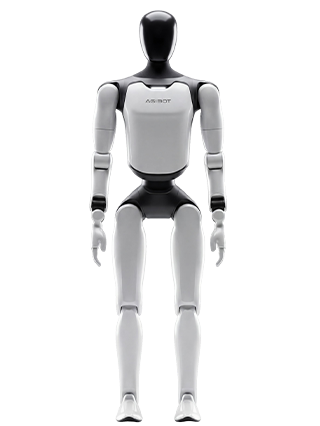
AGIBOT lists A3 at 173 cm tall and 55 kg. Its product page describes microphones arranged for audio pickup around the robot, shoulder touch sensing and voice interaction. These features give context to a machine intended to share space with people.
The company also advertises up to 10 hours of endurance and a 10-second battery swap. Those are product claims. The concert material does not establish the runtime of the robot used in Macao or the workload behind the maximum endurance figure.
For this appearance, the relevant hardware question is how well the sensors and body support an ongoing exchange. A microphone specification cannot tell us how often the robot selects the correct speaker. A video of coordinated gestures cannot reveal the full control system.
What a longer interaction test could show
The cited material does not provide the concert's measured response latency, a count of completed conversational turns or a record of operator interventions. A longer recording with those measurements would make the result easier to assess.
A useful follow-up would keep the same robot in a conversation while speakers take turns, interrupt and resume. Report how often it addresses the intended person. Measure the delay to speech and the timing difference between speech and its associated gesture. Include the attempts that need assistance.
My interest is in whether that coordination holds through a whole exchange. The Macao appearance gives readers a concrete scene to examine. Repeated interactions with published timing data would show how consistently A3 can do it.
Sources and methodology
The event account comes from AGIBOT's post text supplied for this article and the linked TechniaHQRobot post. Architecture and hardware details come from AGIBOT. The benchmark score was checked against the Daily-Omni leaderboard. The proposed interaction tests are TechniaHQRobot analysis.
Share this article
Share the current TechniaHQRobot article page.
Continue reading
Open the latest robotics reporting, Physical AI analysis and hardware notes.