
AgiBot Humanoid Robot Hardware Teardown EtherCAT, DCU Boards and Motor Control
A teardown matters because humanoid robotics is not only a body shell. The real machine is inside the wiring, controllers, power boards and actuator stack.
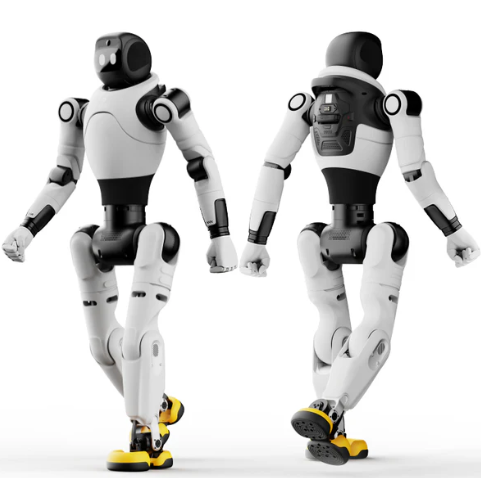
A TechniaHQRobot article on an AgiBot humanoid hardware teardown, including EtherCAT, DCU boards, power cards and motor control sections.
The post focuses on AgiBot hardware internals.
Mentioned sections include EtherCAT, DCU boards, power cards and motor control.
The analysis treats the teardown as hardware evidence, not proof of autonomous deployment.
The important layer is integration power, timing, control and serviceability.
Original X post
Open on XLoading the full X post…
What happened
The TechniaHQRobot post highlights an AgiBot humanoid robot teardown. The named hardware layers are the important part EtherCAT, DCU boards, power cards and motor control sections.
That turns the discussion away from the outer body. A humanoid robot is not only legs, arms and a face. It is a timing-sensitive electrical and control system packed into a moving body.
Why it matters
Hardware teardowns are valuable because they expose engineering choices. EtherCAT points to real-time communication needs. DCU boards point to distributed control. Power cards show how energy is routed. Motor control sections show how joint motion is commanded and regulated.
Those layers decide whether a humanoid can move predictably, recover from errors and remain serviceable after repeated operation.
Technical details
- Robot / Project
- AgiBot humanoid robot teardown
- Company / Lab
- AgiBot / Zhiyuan Robotics
- Country
- China
- Main task
- humanoid hardware platform and embodied AI robot system
- Hardware details
- EtherCAT, DCU boards, power cards and motor control sections are named in the TechniaHQRobot post
- Sensors
- not publicly confirmed from the teardown summary alone
- Mobility
- humanoid platform; exact model-specific mobility should be checked from AgiBot product pages
- Hands / gripper
- not publicly confirmed in the teardown summary
- Deployment environment
- hardware analysis / product watch
- Autonomy level
- not determined by hardware teardown alone
- Confirmed limitations
- a teardown shows architecture, not task reliability or field autonomy
Technical details
The post names EtherCAT, DCU boards, power cards and motor control sections. That suggests a distributed architecture where communication timing, actuator command and power delivery are central.
The teardown does not automatically reveal everything. Sensor models, actuator ratings, firmware behavior, thermal limits, safety circuits and software stack details still need official confirmation.
Use cases
AgiBot’s hardware stack matters for humanoid research, factory pilots, embodied AI data collection and manipulation experiments. The stronger the internal architecture, the easier it becomes to test robots for longer sessions.
The real value is not the teardown image alone. It is what the hardware allows stable control loops, maintainable modules and enough compute and power routing for whole-body tasks.
Limitations
A teardown cannot prove autonomy. It can show components and architecture, but it does not show how well the robot completes tasks, how often it fails or whether it can operate safely around people.
The other limitation is source depth. Without a full bill of materials and official engineering documentation, every technical reading should stay conservative.
What to watch next
Watch whether AgiBot publishes more official product documentation, safety details, actuator specs and deployment evidence. The strongest future signal would connect the hardware design to measured task performance.
For builders, the teardown is useful because it shows what humanoid robotics actually requires buses, controllers, power design, cooling, wiring and maintainable modules.
Related robotics context
AgiBot is part of China’s fast-moving humanoid cluster. Its hardware story should be read beside Unitree’s accessible bodies, UBTECH’s industrial line and Fourier’s humanoid platforms.
Explore the technical topic
Share this article
Share the current TechniaHQRobot article page.
Sources
By @techniahqrobot
About the publication · Sources and editorial policy · Report a correction