

Introduction
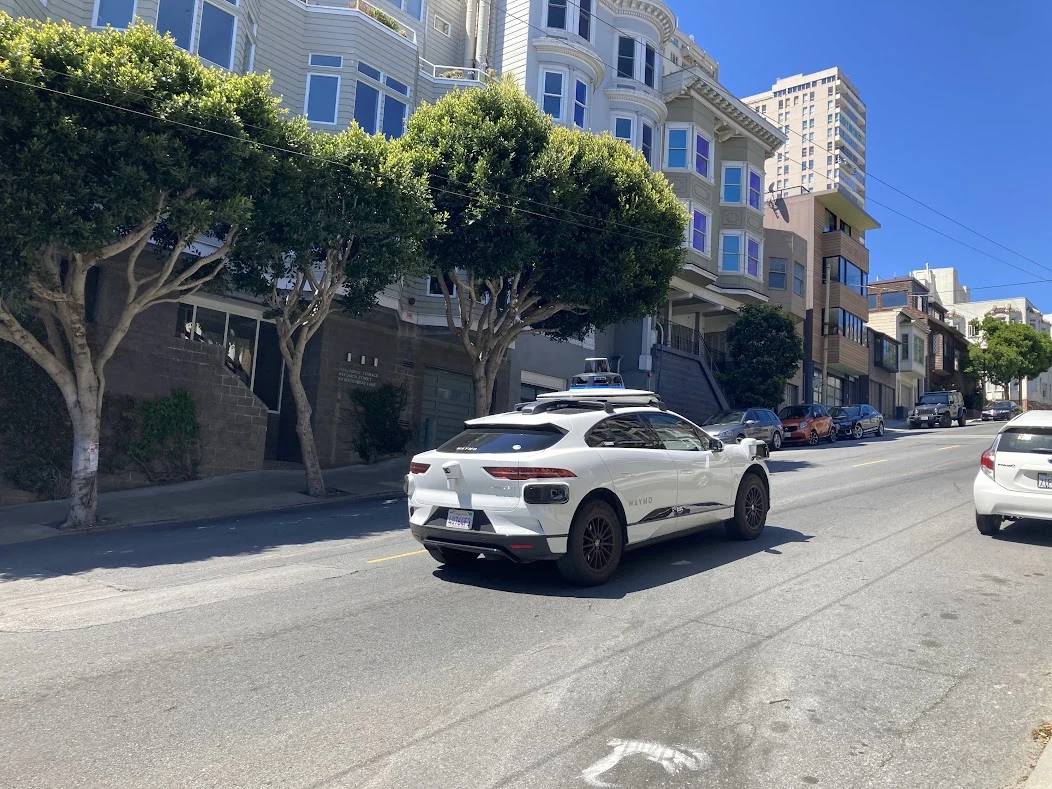
Waymo and Tesla use different technical and deployment strategies for robotaxis. Waymo operates a geofenced service built around cameras, radar, LiDAR, detailed maps and remote assistance. Tesla is developing a camera-led system tied to its vehicle and neural-network stack, but public access and regulatory status vary by city. A fair comparison must separate paid rider service, invitation-only testing, supervised driving and operation without a safety driver.
As of July 15, 2026, Waymo publishes materially more rider-only mileage and city-level safety data. Tesla has expanded limited Robotaxi activity in Texas, yet reporting still describes a smaller fleet, constrained service areas and human monitoring in some operations. Neither company should be judged from a single promotional clip. The useful questions are where the vehicle may operate, what sensors it carries, who can intervene and what evidence exists after millions of real trips.
Key findings
- Waymo combines cameras, radar and LiDAR with detailed operational maps; Tesla emphasizes cameras and learned perception.
- Waymo publishes rider-only mileage and collision comparisons by operating area; Tesla’s public robotaxi safety dataset remains less mature.
- Waymo service is geofenced and city-specific. Tesla access remains limited and the control arrangement can differ between Texas and California.
- Remote support is not the same as remote driving. Both companies retain human operational support, but the intervention mechanisms and disclosure levels differ.
- A deployment label such as “Robotaxi” does not by itself prove driverless operation, commercial scale or unrestricted geographic availability.
Waymo and Tesla robotaxi systems compared
The table describes public information available on July 15, 2026. Service areas, permits and fleet configuration can change quickly.
| Question | Waymo | Tesla Robotaxi |
|---|---|---|
| Primary vehicle platform | Jaguar I-PACE fleet plus newer Zeekr-built platform announced for the Waymo Driver | Modified Model Y vehicles used in early service; purpose-built Cybercab remains a separate product program |
| Perception stack | Cameras, radar and multiple LiDAR units | Camera-led Tesla Vision approach; public production-vehicle sensor configuration does not include LiDAR |
| Mapping | Detailed maps and defined operational domains | Neural-network driving stack intended to generalize with less dependence on Waymo-style HD maps |
| Public operation | Paid rider service in selected US metropolitan areas | Limited public or invitation-based operations in selected areas; status differs by jurisdiction |
| Human support | Fleet response and remote assistance for ambiguous situations | Operational monitoring and human support reported; some deployments have retained safety monitors or human drivers |
| Safety evidence | City-level rider-only mileage and crash-rate comparisons published by Waymo | No directly comparable public robotaxi dataset at Waymo’s mileage and geographic granularity as of verification date |
A remote operator may provide context or guidance without continuously steering the vehicle.
The central difference is the operating model
Waymo treats autonomy as a system deployed inside a defined operational design domain. The vehicle is released only where the company has mapped roads, validated weather and traffic conditions, established fleet facilities and obtained the required permissions. This creates visible limits a rider can use the service in a supported zone but cannot assume the same vehicle will operate anywhere in the country. The restriction is deliberate. It lets Waymo test the same road geometry and edge cases repeatedly, then expand block by block or city by city.
Tesla’s strategy aims for a driving model that can use the large installed base of camera-equipped vehicles and learn from fleet data. That ambition reduces reliance on a dense LiDAR hardware package and may lower vehicle cost, but broad generalization is a harder validation problem. A network that performs well on familiar urban roads must still handle temporary construction, emergency gestures, unusual vehicles, damaged lane markings and weather that alters camera visibility. The comparison therefore involves deployment philosophy as much as sensor count.
Sensors redundancy versus camera-led perception
Waymo vehicles use overlapping cameras, radar and LiDAR. Cameras read color, signs, traffic lights and object appearance. Radar measures range and relative velocity and can remain useful when lighting changes. LiDAR produces direct geometric range measurements that help describe free space, curbs, vehicles and pedestrians. Sensor fusion does not eliminate failure. It gives the system several independent observations when one modality is weak, for example glare in a camera or sparse returns from a dark surface.
Tesla argues that road driving is fundamentally a vision problem and has built its recent consumer driver-assistance stack around exterior cameras and neural networks. The robotaxi program inherits that camera-led direction. Cameras can deliver rich semantic information at low hardware cost, but performance depends on calibration, lens cleanliness, exposure and learned depth estimation. The absence of LiDAR does not automatically make a system unsafe. It removes one direct-ranging modality, so the burden shifts to software validation, temporal inference and the quality of the full safety architecture.
Maps, localization and change detection
Waymo’s maps encode road geometry and contextual priors beyond ordinary consumer navigation. The live sensor system still detects objects and must respond to the current scene; the map is not a prerecorded driving script. It narrows the search space by telling the vehicle where lanes, curbs and traffic controls are normally expected. Localization then aligns live observations with that reference. When construction or a closure changes the environment, the vehicle needs an update path and a policy for inconsistent evidence.
Tesla presents its approach as less dependent on pre-mapping each road to Waymo’s level. That could make geographic expansion faster after the software is proven, because a new city would not require the same mapping pipeline. The trade-off is that the vehicle must infer more structure from current observations and lower-resolution navigation data. In practice, both companies use maps in some form. The technical distinction is how much semantic and geometric prior information the driving stack requires before a route enters service.
Supervision, teleassistance and human intervention
A robotaxi can be driverless inside the cabin while still depending on people elsewhere. Waymo operates fleet response teams that can answer a vehicle’s request for help in an unusual situation. Public descriptions emphasize that remote staff provide contextual assistance rather than continuously driving the car. The onboard system remains responsible for the dynamic driving task. A response center, vehicle recovery process and local fleet team are operational components of the service, not evidence that the car is secretly being steered for every trip.
Tesla’s human support arrangement must be evaluated city by city. Reporting on early Austin operation described vehicles with monitoring and a constrained service area, while California operations have faced a different permit framework and have included human drivers. A safety monitor in the passenger seat, a remote advisor and a remote driver are three different control modes. Any comparison that groups them under “supervised” loses the exact fact that determines whether the vehicle is performing the complete driving task.
Safety evidence and what the numbers can prove
Waymo publishes rider-only mileage, police-reported crash comparisons and injury-related outcomes across several operating areas. Its Safety Impact page reported 220.6 million rider-only miles through March 2026 and breaks mileage out by city. That scale makes rate comparisons more informative than a short pilot, although methodology still matters. Exposure differs by road type, speed, geography and time of day. A lower collision rate in a geofence does not prove equivalent performance on every road outside it.
Tesla publishes broad vehicle-safety reports for its consumer fleet, but those figures are not a substitute for a robotaxi-only dataset with matched roads, miles and operating conditions. Autopilot or supervised Full Self-Driving miles involve a human driver and a different responsibility model. The relevant robotaxi denominator is rider-only or otherwise clearly defined autonomous mileage. Until Tesla releases comparable definitions and event detail, precise numerical claims that one robotaxi system is safer than the other should remain qualified.
Availability on July 15, 2026
Waymo’s official rider page lists service or expansion activity across multiple US metropolitan areas, while the exact public access method differs. Some cities offer rides through the Waymo app or a partner platform. Others are in testing, early access or an announced next phase. The presence of a city name on a corporate map must not be read as unlimited public coverage. The geofence, operating hours, airport access and wait-list status can all differ inside the same metropolitan area.
Tesla’s Robotaxi program has expanded beyond its first Austin launch, with reports of limited beta activity in additional Texas markets. The fleet remains much smaller than Waymo’s published operation and rider access can involve invitations, queueing or narrow service boundaries. In California, permit status has constrained driverless testing and commercial operation. A traveler should check the company app and the local regulator on the day of travel rather than rely on a launch announcement from an earlier month.
Vehicle design and maintainability
Waymo’s mature fleet has used Jaguar I-PACE vehicles fitted with an external sensor suite, onboard compute and redundant systems. That integration adds hardware cost, aerodynamic drag and maintenance tasks such as sensor cleaning and calibration. It also gives engineers dedicated placement for complementary fields of view. The newer Zeekr-built platform is intended around ride-hailing from the beginning, with a cabin and sensor integration designed for fleet use rather than retrofitted consumer ownership.
Tesla’s early robotaxi service uses modified production vehicles, which can benefit from existing manufacturing, service parts and vehicle software. The Cybercab concept removes conventional driver controls and targets a purpose-built fleet model, but an announced vehicle is not the same as a deployed commercial platform. Maintenance economics will depend on delivered hardware, cleaning cycles, tire wear, battery use, vandalism resistance and how often a disabled vehicle requires a human recovery crew.
Where each approach is strongest
Waymo is stronger today for readers asking where a member of the public can take a documented driverless ride and inspect a substantial rider-only safety record. Its weakness is the cost and operational work required to launch each geography. Dense sensing, mapping, depots and local fleet support make expansion deliberate. The service proves a bounded system, not universal autonomy.
Tesla’s strongest argument is potential manufacturing leverage. A camera-led stack on high-volume vehicles could reduce per-vehicle sensor cost and accelerate supply if software and regulation reach the required level. Its current weakness is evidence. Limited service, mixed supervision arrangements and a smaller public dataset make broad performance claims premature. The technology may advance rapidly, but the comparison must stay tied to the exact vehicle, city and date.
How to evaluate the next announcement
Check five items whenever either company announces a new city. Identify whether rides are paid, invitation-only or employee tests. Confirm whether the vehicle has a safety driver or cabin monitor. Read the regulator’s permit category. Find the operating zone and hours. Finally, look for mileage and incident data using a defined denominator. These details reveal more than the word “launch.”
Also inspect what happens when the system cannot proceed. A mature service needs passenger support, remote assistance boundaries, emergency responder procedures, towing, sensor-cleaning and post-incident review. Autonomy is a complete operating system around the car. A smooth demonstration on clear streets shows one path through that system, not the recovery process after a blocked lane, damaged sensor or communications failure.
Limitations and missing information
- Waymo’s published safety rates describe its operational domains and cannot be generalized automatically to every road or weather condition.
- Tesla’s robotaxi configuration, supervision and permit status may differ by city; a single label cannot describe all operations.
- Neither company publishes every disengagement, remote-assistance interaction, software update or fleet-maintenance event in a directly comparable format.
- Announcements about future vehicles or cities are not counted as delivered public service until riders can access the operation under stated conditions.
- Prices are omitted because rider fares, promotions and partner-platform fees change and do not measure the underlying system cost.
Conclusion
Waymo leads the current public comparison on deployed rider-only service, sensor redundancy and published safety mileage. Tesla offers a lower-hardware, manufacturing-led path that could expand differently if its driving software and permits mature. The responsible conclusion on July 15, 2026 is narrow Waymo has the stronger documented robotaxi operation today, while Tesla remains an early and rapidly changing program whose city-level supervision and access must be checked separately.
Frequently asked questions
Is Waymo completely autonomous?
Waymo provides rider-only trips inside approved operating domains, but the service still uses fleet operations, remote assistance and human recovery teams. Driverless does not mean the absence of human operational support.
Does Tesla Robotaxi use LiDAR?
Tesla’s public camera-led strategy does not use LiDAR on its production-vehicle autonomy stack. Exact robotaxi hardware should still be checked for the specific vehicle generation because development configurations can change.
Which service is available to more public riders?
Waymo has the broader documented paid rider-only service as of July 15, 2026. Tesla access remains more limited and varies by city, invitation status and regulatory arrangement.
Can Waymo operate anywhere in the United States?
No. Waymo operates inside defined geographic and operational domains. A vehicle that works in Phoenix or San Francisco is not authorized to provide service on every US road.
Are Tesla consumer FSD safety figures comparable with Waymo robotaxi miles?
Not directly. Consumer FSD includes a supervising driver and different road exposure. A fair robotaxi comparison requires clearly defined autonomous or rider-only mileage and matched incident categories.
Sources and methodology
Evidence for Waymo vs Tesla Robotaxi was rechecked on July 23, 2026 against Waymo, California DMV, Tesla. Time-sensitive prices, permits, service areas and certifications stay dated, and a missing supplier value is not converted into an official specification.
Related TechniaHQRobot guides
Share this article
Share the current TechniaHQRobot article page.
Continue reading
Open the latest robotics reporting, Physical AI analysis and hardware notes.