

Introduction
AMR and AGV describe two approaches to moving material through factories and warehouses. An automated guided vehicle usually follows a defined route encoded by magnetic tape, wires, reflectors, QR markers or another fixed guidance method. An autonomous mobile robot localizes in a digital map, detects obstacles and calculates a path through the available space. The distinction is useful, but it is not absolute modern vehicles often combine fixed traffic rules with dynamic navigation.
The correct choice depends on flow stability, payload, traffic, safety architecture and the cost of changing the facility. An AGV can be efficient on a high-volume route that rarely changes. An AMR can reduce infrastructure work where destinations and aisles change frequently. Neither system creates throughput automatically. Charging, pickup accuracy, door interfaces, traffic control, exception handling and integration with warehouse or manufacturing software determine whether the fleet delivers material on time.
Key findings
- AGVs generally follow engineered paths; AMRs localize in a map and can calculate alternate routes around permitted obstacles.
- AMRs reduce some physical guidance infrastructure, but they still need mapped operating zones, traffic rules, pickup interfaces and commissioning.
- AGVs can be the simpler choice for repetitive, high-volume transport where route stability matters more than flexibility.
- Fleet throughput depends on congestion, station dwell time, charging and dispatch logic, not only maximum vehicle speed.
- Both categories require a risk assessment and safety functions appropriate to the vehicle, payload, environment and human interaction.
AMR vs AGV technical comparison
| Factor | AGV | AMR |
|---|---|---|
| Navigation | Follows predefined physical or virtual guides | Localizes in a map and plans within permitted space |
| Route changes | May require tape, reflector, wire or control-layout changes | Usually edited through maps and fleet rules, followed by validation |
| Obstacle response | Often stops and waits or follows limited bypass logic | Can replan around obstacles when a safe permitted route exists |
| Infrastructure | Guidance markers and fixed traffic design may be required | Needs digital mapping, reliable localization features and network/fleet integration |
| Best fit | Stable repetitive routes and predictable flows | Changing destinations, mixed traffic and flexible material movement |
| Complexity | Simpler path behavior can aid validation | Higher software and perception complexity creates more exception modes |
Deployment questions that affect both systems
| Question | Why it changes the result | Evidence to collect |
|---|---|---|
| How many moves per hour are required? | Sets fleet size and queue tolerance | Timestamped material-flow data by shift |
| How long does loading take? | Station dwell can dominate travel time | Measured pickup and drop-off cycle |
| Where do people cross? | Changes scanner fields, speed zones and layout | Pedestrian heat map and near-miss history |
| What blocks the route? | Determines stop frequency and value of replanning | Obstacle log by location and duration |
| How is charging handled? | Creates unavailable time and traffic near chargers | Battery model, duty cycle and charger utilization |
| Which systems dispatch missions? | Integration errors can idle the fleet | WMS, MES, PLC and API interface map |
What an AGV is
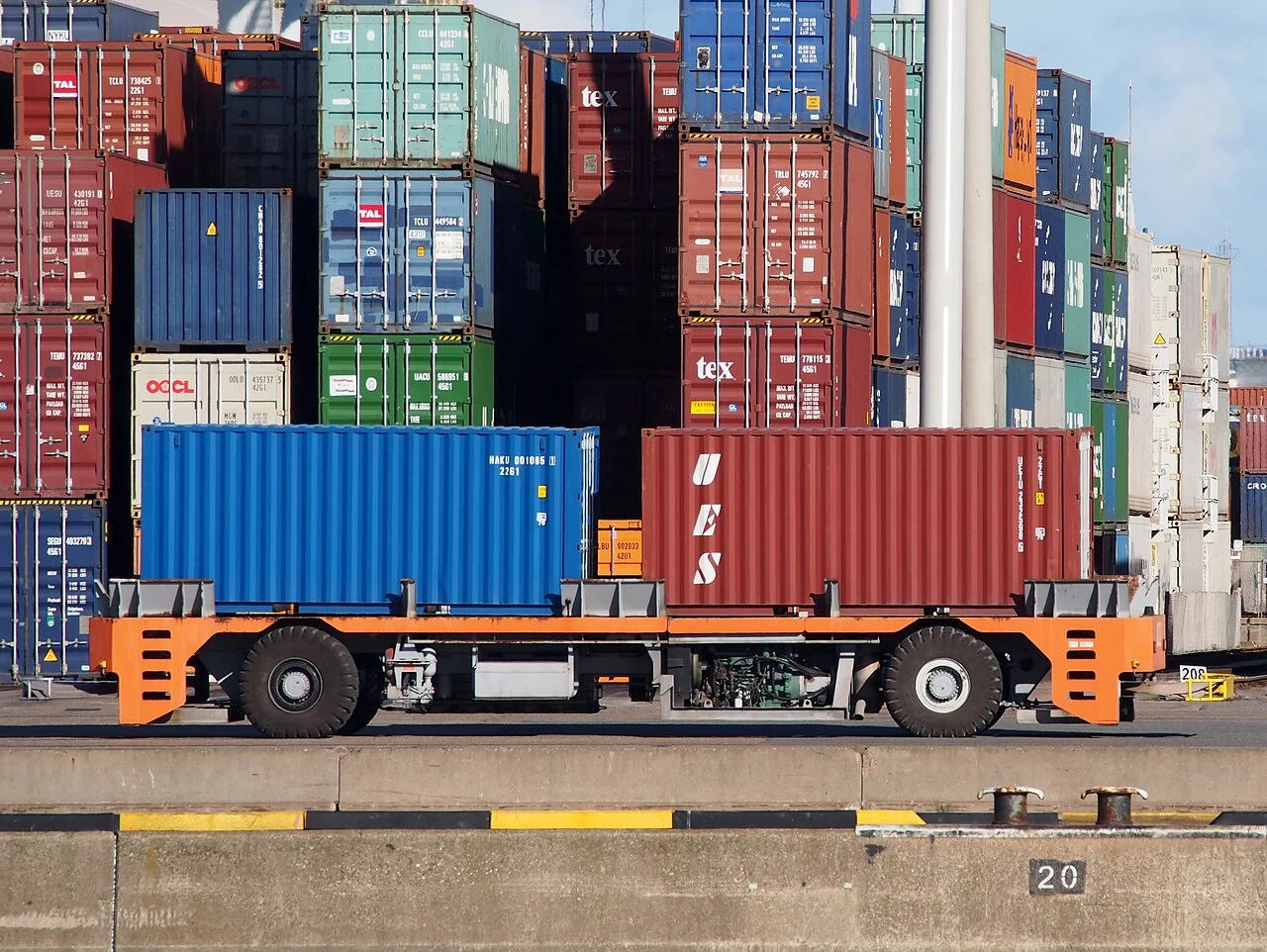
An automated guided vehicle moves along a controlled route. Guidance can come from embedded wire, magnetic tape, optical lines, reflectors, QR codes, natural-feature localization or combinations of these methods. The defining operational idea is that the transport path is tightly engineered and the vehicle has limited freedom outside it.
That constraint can be valuable. A stable loop between a production line and a supermarket area is easy to understand, measure and validate. Stops, intersections and station positions are known. The system can be optimized for repeatable flow. The cost appears when the layout changes or when a blocked path causes vehicles to queue without an approved bypass.
What an autonomous mobile robot is
An autonomous mobile robot estimates its position using sensors such as safety laser scanners, navigation LiDAR, cameras, wheel encoders and an inertial measurement unit. Mapping and localization software compare live sensor data with a stored map. A planner selects a route that respects one-way aisles, speed zones, restricted areas and vehicle dimensions.
Autonomous does not mean unconstrained. The fleet manager still defines where the robot may travel. Safety-rated scanners can reduce speed or stop the platform when a person enters a protective field. If a pallet blocks every legal path, the robot waits or requests help. A map-based system replaces some physical guidance infrastructure with software configuration and perception, not with unlimited intelligence.
AMR navigation and obstacle handling
Most AMRs use simultaneous localization and mapping during setup, then localize against an approved production map. Wheel slip, reflective surfaces, repetitive aisles, moving racks and environmental changes can degrade the pose estimate. Good deployments preserve stable landmarks and use localization diagnostics rather than treating the map as a one-time file.
Replanning is useful only when an alternate path exists and is authorized. A robot should not enter a pedestrian-only zone or squeeze through a clearance that was not validated. Fleet rules can reserve narrow aisles, control intersections and prevent deadlocks. Exception logs should distinguish temporary human traffic from recurring layout problems that need engineering.
Infrastructure and layout changes
AGV infrastructure can be visible, such as tape, or embedded, such as wire and reflectors. It provides a stable reference but creates installation work and can interrupt operations when routes move. Floor damage and marker contamination can also affect guidance. For a facility that changes rarely, those costs may be acceptable and predictable.
AMRs avoid some route hardware, yet they still depend on the building. Charging stations need power and clearance. Automatic doors, elevators, conveyors and machines require interfaces. Wi-Fi or private wireless coverage may be needed for fleet commands and monitoring. Map changes need change control, testing and operator communication. Flexibility lowers the cost of some modifications but does not make modifications free.
Safety vehicle category is not the risk assessment
Safety depends on the complete application vehicle mass, speed, stopping distance, payload shape, forks or lifts, visibility, floor condition and nearby people. International standards for driverless industrial trucks and mobile robots provide requirements, but the integrator and operator must evaluate the actual site.
A low mobile base carrying a stable tote presents a different hazard from a heavy pallet vehicle with an elevated load. Scanner fields must account for speed and braking. Blind corners may need warning devices or traffic separation. Pickup stations can create crushing and shearing hazards. The words AMR and AGV do not prove that a deployed application is safe.
Throughput and fleet sizing
Maximum speed is rarely the main throughput constraint. A robot spends time waiting for material, aligning at a station, opening doors, yielding at intersections, charging and recovering from faults. The fleet model should use measured travel and dwell times for each shift. Average values alone hide peaks that create queues.
Simulation can compare dispatch rules and fleet sizes, but the model must include congestion and station capacity. Adding robots can reduce performance when narrow aisles become saturated. A pilot should record completed missions, empty travel, blocked time, manual interventions, battery state and pickup failures. Those data reveal whether the next improvement is another vehicle or a process change.
Software integration and VDA 5050
A fleet receives transport orders from a warehouse management system, manufacturing execution system, enterprise resource planning system or line controller. The interface must define mission priority, payload identity, destination readiness, cancellation, fault recovery and proof of delivery. A robot that arrives before a conveyor is ready simply moves the queue.
VDA 5050 defines a communication interface intended to support communication between a master control system and driverless transport vehicles. It can reduce vendor-specific integration work, but compliance levels and implemented features must be checked. It does not standardize every map, safety function or vehicle capability. A multi-vendor fleet still needs system testing.
Total cost of ownership
AGV cost includes vehicles, guidance infrastructure, traffic control, stations, installation and future route changes. AMR cost includes vehicles, mapping, fleet software, integration, network readiness, charging, support and map maintenance. Both require training, spare parts, batteries and internal ownership.
Calculate cost per completed transport, not price per robot. Include labor removed from low-value walking, but also include staff who supervise the fleet and resolve exceptions. Compare a conservative case with a peak-demand case. A project is credible when the assumptions can be traced to facility data rather than vendor demonstration timing.
How to choose between AMR and AGV
Choose an AGV when the route is stable, flows are repetitive and deterministic behavior has high value. Choose an AMR when destinations change, bypass routes exist and the operation benefits from software-defined traffic. Hybrid systems are common an AMR may navigate freely between zones, then use markers or mechanical guides for precise docking.
Run a site-specific test with the real payload, floor, intersections and shifts. Measure mission success without manual correction, localization loss, blocked time, docking repeatability and charging availability. The result should identify the operating boundary, not merely prove that one successful route is possible.
Limitations and missing information
- Vendor terminology is inconsistent; some products called AGVs use natural navigation and some AMRs follow tightly constrained routes.
- Dynamic obstacle avoidance cannot help when every legal route is blocked.
- Map-based navigation can degrade after racks, walls or reflective surfaces change.
- Fleet simulations can overstate throughput if they omit station dwell, charging and human traffic.
- Safety performance depends on the configured application and validated stopping behavior, not the marketing category.
- Integration with doors, conveyors, WMS, MES and PLC systems may cost more than expected.
Conclusion
AMR versus AGV is a decision about operating structure. Stable routes and predictable flow favor guided vehicles. Frequent layout changes and useful alternate paths favor map-based mobile robots. Build the choice from measured missions, station times, traffic and safety constraints, then validate the full workflow with real payloads.
Frequently asked questions
What is the main difference between an AMR and an AGV?
An AGV generally follows an engineered route, while an AMR localizes in a map and plans a path through permitted space. Modern products can combine both approaches.
Can an AMR drive around any obstacle?
No. It can replan only when a safe, mapped and authorized alternate route exists. Otherwise it stops, waits or requests intervention.
Are AMRs safer than AGVs?
The category alone does not determine safety. Vehicle mass, speed, payload, scanner configuration, braking, layout and the validated application determine risk.
Which is cheaper, an AMR or an AGV?
There is no universal answer. AGVs may need more physical guidance infrastructure. AMRs can require more software, mapping and integration. Compare total cost per completed transport.
What is VDA 5050?
VDA 5050 is a communication interface for connecting a master control system with driverless transport vehicles. It can support multi-vendor integration but does not standardize every vehicle function.
Sources and methodology
The AMR vs AGV review was refreshed on July 23, 2026 using Mobile Industrial Robots, OTTO Motors, International Organization for Standardization. Any quoted price or availability remains tied to country, configuration, tax, shipping, software and support conditions published by the seller.
Performance claims for AMR vs AGV remain attributed to the named manufacturer or institution unless a separate test reproduces them. Unpublished payload, runtime, accuracy or service data is left blank.
Related TechniaHQRobot guides
Share this article
Share the current TechniaHQRobot article page.
Continue reading
Open the latest robotics reporting, Physical AI analysis and hardware notes.