
.jpg)
The 2025 edition is the verified baseline for the World Humanoid Robot Games. It establishes the first event format, participant scale, control rules and results needed for a clean year by year comparison with 2026.
Introduction
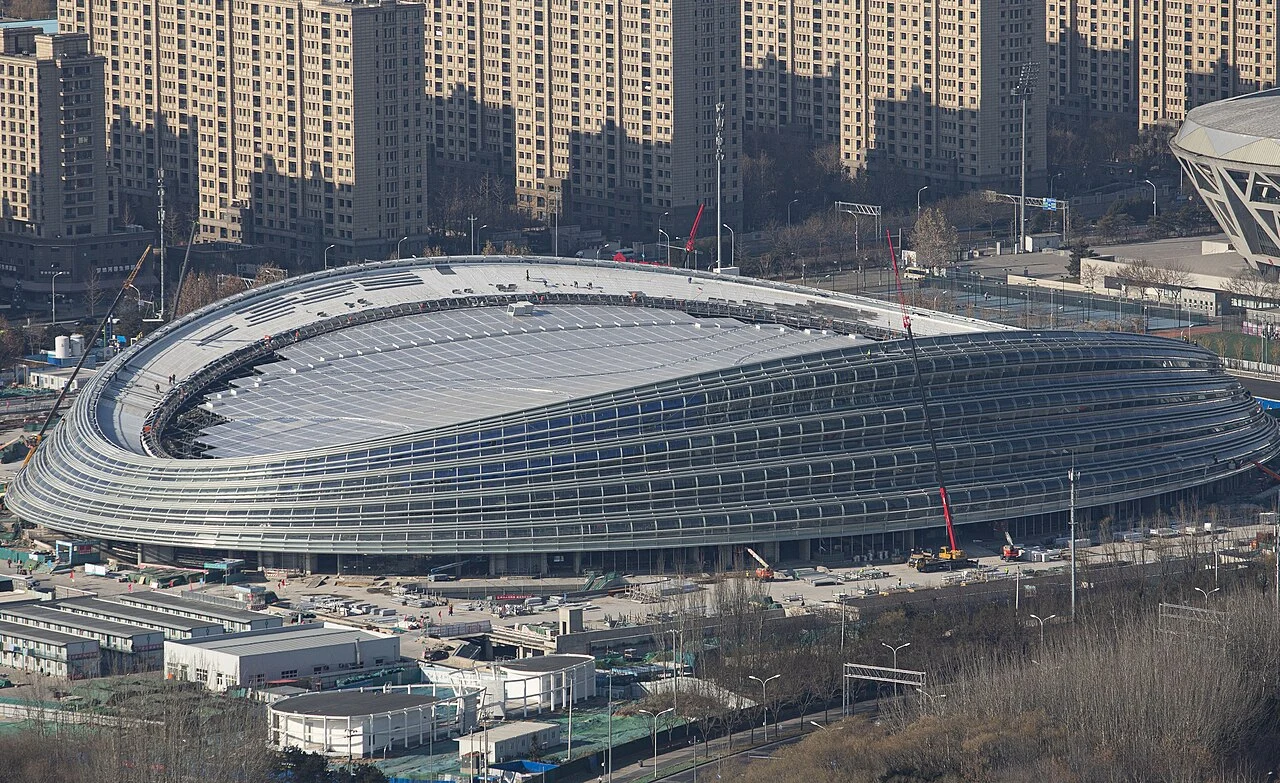
The inaugural World Humanoid Robot Games, officially identified in Chinese as 2025世界人形机器人运动会, opened on August 14, 2025 at Beijing’s National Speed Skating Oval. Formal competition ran from August 15 to 17.
Final organizer reporting counted 280 teams from 16 countries across five continents. More than 500 humanoid robots representing 127 brands took part in 26 events and 487 matches.
The event was jointly hosted by the Beijing Municipal People’s Government, China Media Group, the World Robot Cooperation Organization and the RCAP International Council. This archive keeps the first edition separate from the larger 2026 Games so results and control rules are not mixed between years.
Research date September 3, 2026. Information verified from official sources available as of September 3, 2026.
Direct answer
The inaugural World Humanoid Robot Games opened on August 14, 2025 in Beijing and held competition from August 15 to 17. It brought together 280 teams from 16 countries, more than 500 robots, 26 events and 487 matches. Tiangong Ultra won the 100 m with an official scored result of 21.50 seconds. A Unitree H1 won the 1500 m in 6 minutes 34.40 seconds.
World Humanoid Robot Games 2025 final figures
| Item | 2025 result |
|---|---|
| Official Chinese name | 2025世界人形机器人运动会 |
| Opening ceremony | August 14, 2025 |
| Competition dates | August 15 to 17, 2025 |
| Venue | National Speed Skating Oval, Ice Ribbon, Beijing |
| Countries | 16 across five continents |
| Teams | 280 |
| Robots | More than 500 |
| Brands | 127 |
| Events | 26 |
| Matches | 487 |
| Hosts | Beijing Municipal People’s Government, China Media Group, World Robot Cooperation Organization and RCAP International Council |
Selected 2025 results
| Event | Robot or team | Reported result |
|---|---|---|
| 100 m | Tiangong team, Tiangong Ultra | Official scored result 21.50 s |
| 1500 m | Unitree H1 | 6 min 34.40 s |
| 400 m | Unitree H1 | 1 min 28.03 s |
| 5v5 football | Tsinghua Hephaestus | 1 to 0 vs HTWK Robots + Nao Devils |
| Floor exercise | Songyan Dynamics, Little Rascal | Gold with 41.6 points |
The 100 m figure is the official scored result. Beijing reporting states that the fully autonomous Tiangong entry received a 0.8 time coefficient, so 21.50 seconds should not be treated as an unadjusted stopwatch time.
The program combined sports, performance and practical tasks
The final program contained 26 events and 487 matches. Athletics included the 100 m, 400 m, 1500 m and 4×100 m relay. The schedule also included football, floor exercise, dance, martial arts and freestyle combat.
Scenario competitions tested material handling, sorting, medicine related work and hotel services. These events put locomotion, perception and manipulation into scored workflows rather than treating movement as the only measure of performance.
Autonomy and remote control were scored differently
The official 2025 competition framework allowed manual remote control or fully autonomous control in many events. Floor exercise, solo dance and group dance were required to run fully autonomously.
The 100 m final also used a scoring adjustment tied to control mode. Beijing reporting states that the fully autonomous Tiangong entry received a 0.8 time coefficient. That means its published 21.50-second winning result should not be read as a raw stopwatch time.
Tiangong Ultra won the 100 m
The Tiangong team from the Beijing Humanoid Robot Innovation Center won the 100 m with an official scored result of 21.50 seconds. Beijing reporting says Tiangong and Tianxiao used Tiangong Ultra robots and ran without remote control using vision and lane keeping.
Tianxiao fell during the final and did not record a result. Unitree affiliated Lingyi Technology and Gaoyi Technology finished second and third. The documented fall is useful context because the race tested both speed and the stability needed to finish.
Unitree H1 won the distance events reported by Xinhua
A Unitree H1 won the 1500 m in 6 minutes 34.40 seconds. Xinhua also reported that the same robot model won the 400 m in 1 minute 28.03 seconds.
The 1500 m exposed a different engineering problem from the sprint. Teams had to sustain gait stability, cornering, thermal behavior and control over several minutes rather than maximize acceleration for one straight.
Tsinghua Hephaestus won the 5v5 football final
Tsinghua Hephaestus faced Germany’s HTWK Robots + Nao Devils in the 5v5 final and won 1 to 0. The only goal came from an own goal in the first half.
The event’s official closing report described the 5v5 match as fully autonomous. That makes football a distinct test from track racing because the robots had to perceive a changing scene, find the ball, maintain balance and make team decisions without a fixed lane.
Songyan Dynamics won the floor exercise
Beijing Municipal Government reporting confirms that Songyan Dynamics won the floor exercise with its Little Rascal humanoid. The robot scored 41.6 points.
The result measured whole body coordination and execution quality rather than race speed. The official rules scored required movements including balance poses, jumps, inversions, rolls and flips.
Documented failures showed the limits of the first edition
Official and state media coverage recorded falls, lane drift and recovery problems during the 2025 Games. Tianxiao’s fall in the 100 m final is one clear example documented by Beijing authorities.
Those failures should not be converted into broad claims about all humanoids. They show a narrower point. High speed locomotion still had a significant stability cost and repeated task completion remained difficult for many systems.
Limitations and missing information
- The official robot total is reported as more than 500. No exact final robot count has been added.
- The 100 m official result used an autonomy scoring adjustment. This page does not present 21.50 seconds as an unadjusted raw crossing time.
- The site does not reproduce a full 26 event medal table because the official results were not available in a stable machine readable form during this update.
- No claim about event wide autonomy has been added. Control conditions differed by event in 2025.
Sources and methodology
Results are attributed to event organizers or named contemporary reports. The 100 m autonomy coefficient is documented in Beijing's August 18 report; no raw crossing time is reconstructed. Final totals take priority over registration figures.
Related TechniaHQRobot guides
Fact-check report
Verified
Share this article
Share the current TechniaHQRobot article page.
Continue reading
Open the latest robotics reporting, Physical AI analysis and hardware notes.