
Humanoid robotics event
Reading time 24 min readWorld Humanoid Robot Games 2026

World Humanoid Robot Games 2026: Schedule, Robots, Teams and Events

World Humanoid Robot Games 2026 takes place August 22–26 in Beijing. Explore the schedule, robot competitions, teams, countries and major humanoid events.

By TechniaHQRobot

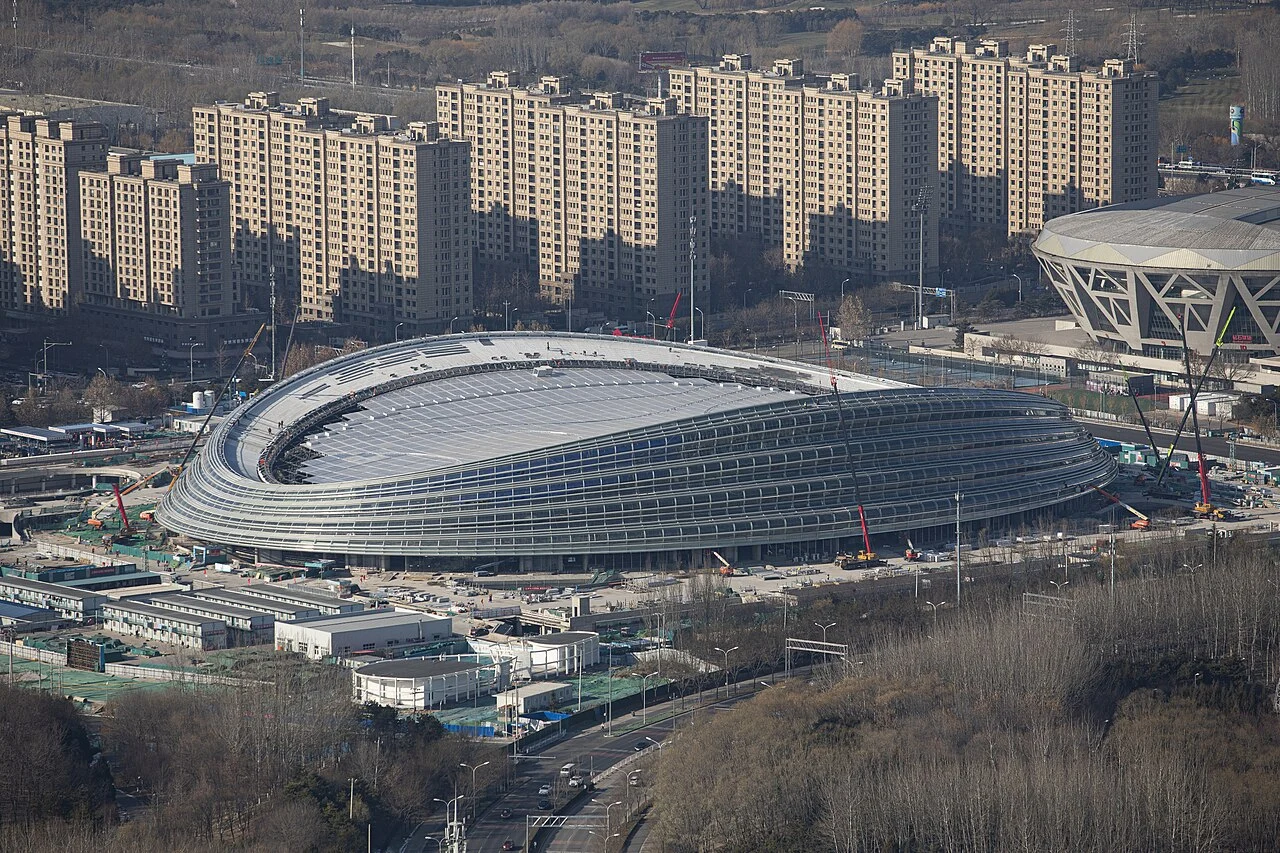
World Humanoid Robot Games 2026 at Beijing National Speed Skating Oval with humanoid robots competing

The August 13 press conference confirmed the final scale of the second edition: 2,056 robots, 666 teams, 16 countries across six continents, 51 events and 1,301 matches over five days.

Introduction

The World Humanoid Robot Games 2026 will put 2,056 robots into competition at Beijing’s National Speed Skating Oval from August 22 to 26. The August 13 press conference confirmed 666 teams from 16 countries across six continents and 1,301 matches packed into five days.

The scale changed again after the June program announcement. In June, organizers had finalized 50 events. The August 13 briefing now lists 51 events: 30 competitive events and 21 scenario-based events. That makes the August 13 figures the current reference point for the 2026 Games.

The useful part will be the failures as much as the medals. Missed grasps, unstable recovery, navigation errors, two-hand coordination problems and any switch from autonomy to teleoperation will show where current humanoid systems still break under repeated competition.

People searching for robot game 2026 or Robot Olympics 2026 are often looking for this event. World Humanoid Robot Games is the official name; Robot Olympics is only an informal description of its international robot sports and real-world task competitions.

Research date: August 13, 2026. Information verified from official sources available as of August 13, 2026.

Direct answer

The World Humanoid Robot Games 2026 will run August 22–26 at Beijing’s National Speed Skating Oval with 2,056 robots, 666 teams from 16 countries across six continents, 51 events and 1,301 matches. China accounts for 641 teams and 1,975 robots.

Key findings

  • The second World Humanoid Robot Games run August 22–26, 2026 at Beijing’s National Speed Skating Oval, the Ice Ribbon.
  • The August 13 press conference confirmed 2,056 robots and 666 teams from 16 countries across six continents.
  • China accounts for 641 teams and 1,975 robots, representing 157 companies and 200 universities or research institutes.
  • The current program contains 51 events: 30 competitive events and 21 scenario-based events, with 1,301 matches over five days.
  • Team participation is up 138% from the inaugural 2025 Games, which had 280 teams.
  • The training and evaluation base had operated for 30 days and hosted nearly 1,000 training sessions by August 13.
  • Autonomy varies by event. The 100 m, 400 m, 1500 m and 4×100 m relay have been announced as fully autonomous race formats, but that does not mean every robot or every event is autonomous.

World Humanoid Robot Games 2026: confirmed key figures

ItemConfirmed August 13, 2026
DatesAugust 22–26, 2026
VenueNational Speed Skating Oval (Ice Ribbon), Beijing
Robots2,056
Teams666
Countries16 across six continents
Total events51
Competitive events30
Scenario-based events21
Matches1,301
Competition units9 across five days
China641 teams and 1,975 robots
Chinese participants157 companies + 200 universities or research institutes
Ticket rangeRMB 98–670

World Humanoid Robot Games: 2025 vs 2026

The 2025 figures are final post-event totals. The 2026 figures reflect the third official press conference on August 13, nine days before competition begins.

20252026
280 teams666 teams
500+ robots2,056 robots
16 countries16 countries across six continents
26 events51 events
487 matches1,301 matches
3 competition days5 competition days
Sports, performance and early scenario events30 competitive events + 21 scenario events
Mixed autonomy and remote-control conditions across eventsMore explicit event-specific autonomy requirements, including fully autonomous track races

World Humanoid Robot Games 2026 dates

The World Humanoid Robot Games 2026 runs for five days, from Saturday, August 22 through Wednesday, August 26, 2026. The date range covers the competition program at the Beijing venue.

This page will keep the dates, daily schedule status and confirmed event information together so readers do not need a separate, duplicate schedule URL.

Where are the World Humanoid Robot Games 2026 held?

The Games are held at the National Speed Skating Oval in Beijing, China. The venue is also known as the Ice Ribbon and hosted the inaugural World Humanoid Robot Games in 2025.

The World Humanoid Robot Games Beijing program brings robot sports, dexterous manipulation and real-world scenario tests into one venue, making it possible to compare several parts of a humanoid system under public competition conditions.

World Humanoid Robot Games 2026 schedule

The confirmed World Humanoid Robot Games 2026 schedule spans August 22–26. Organizers have announced 1,301 matches across nine competition units, but the project data does not yet contain a complete official event-by-event timetable for every day.

The daily structure below separates confirmed program details from dates whose detailed allocation still needs an official update. No unconfirmed start time or event assignment has been added.

  1. Day 1

    Opening day

    Current project sources identify an opening-night 7v7 football exhibition plus 400 m and 100 m heats. Exact session times should be checked against the official timetable when published.

  2. Day 2

    Competition day 2

    The Games are in competition, but a verified event-by-event allocation for this date is not yet available in the project data.

  3. Day 3

    Competition day 3

    The Games are in competition, but a verified event-by-event allocation for this date is not yet available in the project data.

  4. Day 4

    Competition day 4

    The Games are in competition, but a verified event-by-event allocation for this date is not yet available in the project data.

  5. Day 5

    Finals and closing day

    Current project sources place the freestyle-combat final and 5v5 football final before the closing ceremony. Exact session times remain subject to the official timetable.

Schedule update policy: the detailed daily program will be updated when official event times and complete day-by-day allocations are available. Until then, dates without confirmed details remain clearly marked instead of being guessed.

World Humanoid Robot Games 2026 events

The latest official briefing lists 51 events: 30 competitive events and 21 scenario-based events. A June announcement had described 50 events, so older references to 50 reflect an earlier version of the program rather than the current August 13 total.

Together, the robot games 2026 program tests sport performance, contact, teamwork, manipulation and task execution in settings that resemble factories, shops, hospitality, homes and rescue work.

Humanoid robot football

Football tests vision, localization, ball control, balance and multi-robot coordination. The program includes a 7v7 exhibition and competitive 5v5 groups, with a new 3v3 U19 category also announced.

Humanoid robot athletics

Athletics includes running formats such as 100 m, 400 m, 1500 m and the 4×100 m relay. Those four races have been announced as fully autonomous formats, a claim that should not be generalized to every robot or every event.

Robot combat and kung fu

Martial arts, kung fu-style demonstrations, freestyle combat and other contact events stress balance recovery, whole-body control and safe force management.

Weightlifting, table tennis and tug-of-war

Weightlifting and tug-of-war expose force, traction and balance limits, while table tennis adds fast perception, prediction and precise arm timing.

Industrial manufacturing tasks

Industrial scenarios examine whether humanoid robots can position themselves, handle objects and complete structured production tasks reliably rather than perform only a single rehearsed motion.

Retail and restaurant scenarios

Retail, hotel and restaurant-style service scenarios test navigation around people, object selection, delivery and interaction in spaces built for human workers and customers.

Home cleaning

Home-service and cleaning tasks combine navigation, scene understanding and manipulation of objects that may not be placed in a perfectly repeatable position.

Rescue tasks

Emergency rescue scenarios test mobility, perception and task execution where obstacles, access and time pressure make a clean laboratory sequence less representative.

Dexterous manipulation

Eight micro-manipulation tests focus on dexterous hands. Announced examples include weighing powder, picking beans with tweezers, opening bottle closures and tightening screws.

What “robot game 2026” means at this event

A search for robot game 2026 can refer to many kinds of robotics competition. At the World Humanoid Robot Games 2026, it covers robot sports such as football, athletics, combat, weightlifting and table tennis as well as scored real-world tasks in industrial, retail, restaurant, home-cleaning and rescue scenarios.

The common thread is embodied performance: the robot must perceive, move, balance, coordinate or manipulate under competition rules. This is why one strong race does not automatically predict strong performance in a dexterous-hand or service task.

2,056 robots and 666 teams are now confirmed

The August 13 press conference gives the clearest picture yet of the 2026 field. Organizers say 2,056 robots are registered across 666 teams from 16 countries on six continents. The number of teams is 138% higher than the 280 teams that competed in 2025.

China represents most of the field: 641 teams and 1,975 robots. Those teams come from 157 companies and 200 universities or research institutes. Organizers also highlighted participation from the United States, Germany and Japan, while Brazil is sending a national group assembled from five robot-football teams.

The organizers have confirmed 16 participating countries, but the August 13 public briefing does not provide a complete list of all 16. This page therefore does not invent the remaining country names.

The final program is now 51 events, not 50

The event count changed between the June and August briefings. On June 12–13, organizers announced that 50 events had been finalized. On August 13, the third press conference raised the current total to 51: 30 competitive events and 21 scenario-based events.

That distinction matters because older articles and search results can still show 32 events from the April announcement or 50 events from June. For the event as currently scheduled, 51 is the latest official figure.

1,301 matches are packed into five days

The 2026 Games will stage 1,301 matches from August 22 to 26. The schedule expands from three competition days and six competition units in 2025 to five days and nine units in 2026.

Competition sessions have also shifted toward afternoon and evening blocks. Organizers said each unit will run for roughly three hours. Opening night includes a 7v7 football exhibition plus 400 m and 100 m heats. The closing program places the freestyle-combat final and 5v5 football final before the closing ceremony.

Sports now test more than running speed

The competitive program includes athletics, football, gymnastics, weightlifting, table tennis, martial arts, street dance, dancesport, freestyle combat, tug-of-war and pitch-pot. These events stress different parts of a humanoid stack: balance, contact control, perception latency, multi-robot coordination, whole-body force and recovery.

Football now includes a new 3v3 U19 category alongside 5v5 large-robot and 5v5 medium-robot groups. Martial arts and dancesport have moved into the competitive program, while the former peripheral-event structure has been removed.

Autonomous running is an event-specific benchmark

The 100 m, 400 m, 1500 m and 4×100 m relay have been announced as fully autonomous race formats. In those events, the robot must use onboard perception and control rather than a human steering each correction.

That wording should stay narrow. A robot running one marked track autonomously does not prove general autonomy, and the Games do not require every category to use the same autonomy setup. Each video needs to be checked against the rules of its specific event.

21 scenario events move the Games toward real work

The scenario program has grown from six events in 2025 to 21 in 2026. It covers nine real-world areas including home service, hotels, industrial production, emergency rescue, libraries, retail, office service, garden inspection and new-energy vehicle charging.

The format is also becoming more competitive. Organizers say some scenario tasks will move from a single robot working alone to two or even four robots operating in the same contest. That adds interference, timing pressure and a less controlled environment.

Dexterous-hand tasks expose precision failures

The Games include eight dedicated dexterous-hand micro-manipulation tests. Official descriptions highlight tasks such as powder weighing, picking beans with tweezers, opening or prying bottle closures and tightening screws, alongside other small-object manipulation tasks.

These tasks expose problems that a box-carrying demo can hide. A robot may walk well and still fail because finger positioning is off by a few millimeters, contact force is poorly regulated or the hand cannot recover after a slipped grasp.

The training center is already producing useful data

By August 13, the humanoid robot training and evaluation base at the venue had operated for 30 days and hosted nearly 1,000 training sessions. The organizer’s robot management platform had already connected all 666 teams and 2,056 robots.

The system uses dedicated encrypted communication links and can track operational data such as joint temperature, motion state and battery level. The pre-event training period is therefore worth watching separately from the official competition because teams are already exposing locomotion, manipulation and scenario-task problems during repeated practice.

What failures will tell us

A clean company demo can be repeated until the best take is captured. A five-day competition with 1,301 matches gives teams far fewer places to hide intermittent failures. That makes recovery behavior and intervention rate as useful to watch as medals.

  • Missed grasps: whether the robot can detect a failed pickup and try again.
  • Falls and recovery: whether it can stand up without a manual reset.
  • Balance under contact: whether pushing, lifting or tugging destabilizes the whole body.
  • Two-hand coordination: whether both hands can maintain alignment during fine tasks.
  • Navigation mistakes: lane drift, wrong object selection or poor positioning before manipulation.
  • Teleoperation: whether a human has to take over when the autonomous policy breaks.
  • Repeatability: whether a strong run can be reproduced across multiple heats or task attempts.

Tickets and practical information

The Games run August 22–26 at the National Speed Skating Oval, the Ice Ribbon, in Beijing. Current official ticketing information lists prices from RMB 98 to RMB 670 depending on the session and seating category.

Official and partner ticket channels listed in Beijing reporting include the Chaopiao Saiyan WeChat mini-program, Damai, Maoyan, JD Entertainment Ticketing, Trip.com, Tongcheng and Meituan. International buyers are also directed to Damai International/Maiseat.

Read the 2025 Games separately

The inaugural 2025 World Humanoid Robot Games now have a dedicated archive page with the final field, 26 events, 487 matches and key results. Keeping the two editions on separate URLs prevents 2025 results from being mixed with 2026 pre-event data.

How big are the 2026 World Humanoid Robot Games?

The confirmed field contains 2,056 robots, 666 teams, 16 countries across six continents and 1,301 matches over five days. China accounts for 641 teams and 1,975 robots, including teams from 157 companies and 200 universities or research institutes.

The 2025 vs 2026 comparison table above shows the expansion clearly: teams rose from 280 to 666, robots from more than 500 to 2,056, events from 26 to 51 and matches from 487 to 1,301. The 2026 competition window also grows from three to five days.

Companies participating

The August 13 briefing counts 157 Chinese companies in the domestic field. The available project data does not provide a verified complete company-by-company roster, so this page does not turn prominent humanoid manufacturers into claimed participants without confirmation.

Universities and research institutes

The same briefing counts 200 Chinese universities or research institutes. Their presence matters because competition results can expose research progress in locomotion, manipulation, perception and multi-robot coordination under repeated trials.

Why people call it the Robot Olympics

Robot Olympics is an informal phrase used by readers and media for an international event that combines multiple robot sports, national participation and medal-style competition. It is a useful description of the search intent, but it is not the official event name.

The official name of the event covered on this page is World Humanoid Robot Games 2026. Using that name keeps the Beijing competition distinct from other robotics contests and avoids implying an affiliation with the Olympic Games.

Is “Robot Olympics 2026” the same event?

In the context of humanoid robot sports in Beijing from August 22–26, a search for Robot Olympics 2026 will often be pointing to the World Humanoid Robot Games 2026. The phrases describe the same search target here, but only World Humanoid Robot Games is treated as the official name.

Humanoid robots to watch

The most useful robots to watch are not necessarily the most famous brands. Look for platforms that can repeat a task, recover after a fall or missed grasp, manage contact and move between perception, locomotion and manipulation without manual reset.

The complete 2026 robot roster is not available in the current project data. TechniaHQRobot therefore links to verified humanoid and company profiles for industry context without claiming that a specific Unitree, UBTECH or other platform is entered unless an official roster confirms it.

Technology behind the competition

The Games are a systems test. A humanoid must combine mechanical design, sensing, control and AI quickly enough to act in the physical world while remaining stable and recoverable.

Locomotion

Walking and running controllers must manage foot placement, ground contact and body momentum. Track speed is useful, but lane keeping, stopping and repeatability matter just as much.

Balance and recovery

Contact sports, lifting and tugging disturb the center of mass. Recovery behavior shows whether the controller can respond to an error rather than depend on a perfect trajectory.

Dexterous hands

Fine manipulation requires fingertip positioning, force control and grasp recovery. Small objects and tools reveal precision problems hidden by large box-carrying demonstrations.

Vision

Cameras and other sensors must locate lanes, balls, tools, targets, people and obstacles. Perception errors can become balance or manipulation failures a fraction of a second later.

AI models

AI policies can connect visual observations and task instructions to robot actions, but competition evidence should always distinguish learned autonomy from teleoperation, prepared motion and rule-specific control.

Embodied AI and Physical AI

Embodied AI and Physical AI describe intelligence expressed through sensors, actuators and contact with the world. The Games make those ideas measurable through task completion, intervention, recovery and repeated performance.

Real-world manipulation

Industrial, retail, hospitality, cleaning and rescue scenarios test whether a robot can position its body and hands around objects whose geometry and location vary more than in a fixed demonstration.

Why the World Humanoid Robot Games matter for robotics

A public competition creates evidence that polished product videos rarely show: failure frequency, recovery strategy, intervention, heat, battery limits and the ability to reproduce a good result across many attempts.

With 1,301 matches and tasks across sport and real-world scenarios, the 2026 Games can help separate spectacular motion from dependable Physical AI. The strongest signal will be a robot that notices a mistake, recovers and finishes without a human reset.

Limitations and missing information

  • Competition starts on August 22, 2026, so no 2026 sporting results exist yet.
  • The 2,056 robots are not 2,056 identical general-purpose humanoids. Platforms and task specialization vary across categories.
  • Autonomy requirements differ by event. A strong autonomous race result should not be generalized to every task or every robot.
  • Training videos may use teleoperation, prepared trajectories or task-specific policies unless the team or rules explicitly state otherwise.
  • The public August 13 briefing confirms 16 countries but does not publish the complete list of all 16.
  • Ticket inventory and session availability can change after August 13.

Conclusion

The 2026 Games are large enough to expose performance under repetition. With 2,056 robots and 1,301 matches sharing the same venue, the useful signals will come from recovery, intervention, repeatability and the transition between locomotion, perception and manipulation.

Watch the robot after the mistake. A missed grasp followed by a clean retry, or a fall followed by an autonomous recovery, says more about deployment readiness than a single perfect run.

Frequently asked questions

When are the World Humanoid Robot Games 2026?

The second World Humanoid Robot Games run from August 22 to August 26, 2026 at Beijing’s National Speed Skating Oval.

How many robots are competing in 2026?

The August 13 official press conference confirmed 2,056 robots.

How many teams are competing?

666 teams are registered. China accounts for 641 teams and 1,975 robots.

How many countries are participating?

Organizers confirm 16 countries across six continents. The public August 13 briefing explicitly mentions China, the United States, Germany, Japan and Brazil but does not publish the complete list of all 16.

How many events are in the World Humanoid Robot Games 2026?

The latest August 13 figure is 51 events: 30 competitive events and 21 scenario-based events. The earlier June total of 50 is now outdated.

How many matches will be held?

The five-day schedule contains 1,301 matches across nine competition units.

What is the World Humanoid Robot Games 2026 schedule?

The Games run August 22–26, 2026. Current project sources identify opening-day 100 m and 400 m heats plus a 7v7 football exhibition, and closing-day freestyle-combat and 5v5 football finals. A complete official event-by-event daily timetable is not yet available in the project data.

Is Robot Olympics 2026 the official name?

No. Robot Olympics is an informal phrase people may use when searching for the event. The official name covered here is World Humanoid Robot Games 2026.

What kinds of robot game are included in 2026?

The program combines robot sports such as football, athletics, combat, weightlifting, table tennis and tug-of-war with industrial, retail, hospitality, home-service, rescue and dexterous-manipulation scenarios.

Which races are fully autonomous?

The 100 m, 400 m, 1500 m and 4×100 m relay have been announced as fully autonomous race formats.

How much are tickets?

Current official ticket information lists prices from RMB 98 to RMB 670 depending on the session and seating category.

Sources and methodology

This page was re-verified on August 13, 2026 against the third official Beijing Municipal Government press conference, the official World Humanoid Robot Games site, Beijing Daily reporting, Xinhua coverage and Beijing ticketing information.

Where the June and August figures differ, the August 13 press conference is treated as the current source of truth. The event count is therefore 51, not 50.

The article separates confirmed event rules from broader claims about robot autonomy and does not infer the names of countries that organizers have not publicly listed.

Official image recommendations

Use the exact robot and generation named below. Confirm reuse rights with the source owner before publication or social distribution.

Structured data implementation

  • NewsArticle with August 14 dateModified, author, publisher and canonical route.
  • Event schema with the confirmed August 22–26 dates and National Speed Skating Oval location.
  • FAQPage derived from visible FAQ entries.
  • BreadcrumbList for Robotics News > World Humanoid Robot Games 2026.

Fact-check report

Verified:

Share this article

Share the current TechniaHQRobot article page.

Continue reading

Open the latest robotics reporting, Physical AI analysis and hardware notes.

Browse robotics news
Article by @techniahqrobot

ROBOTICS RESEARCH

Go deeper intorobotics

Independent coverage of humanoid robots, Physical AI, industrial robotics, robot hardware and emerging automation systems.

Open the latest technical analysis, robot directories, and deployment guides built around measurable engineering decisions.

service@techniahqservice.com