

Introduction
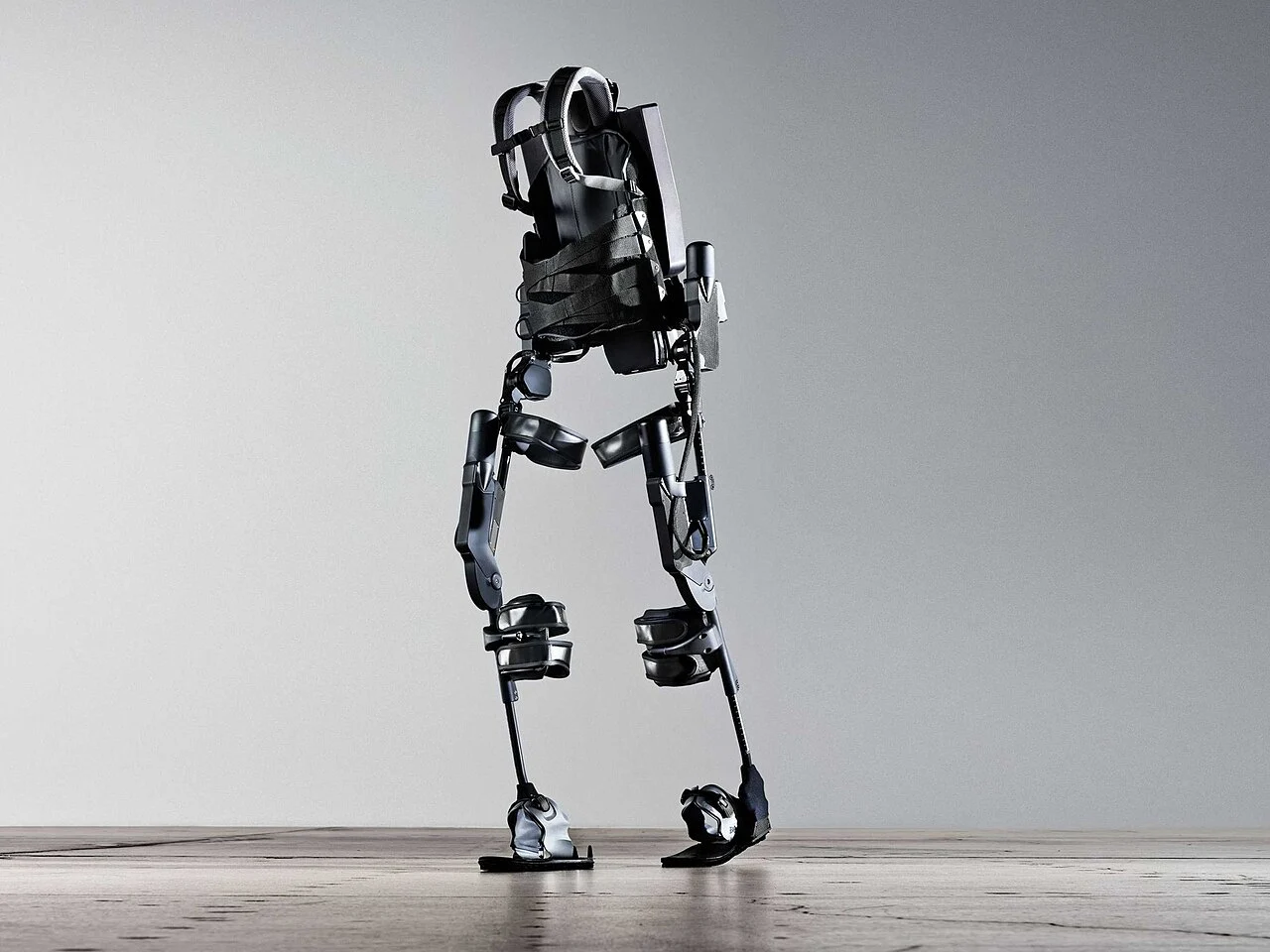
Exoskeleton robots are wearable systems that transfer mechanical assistance between a device and a person. Medical products can support gait training or personal mobility for narrowly defined users. Industrial systems reduce shoulder, back or leg loading during specific tasks. Passive exoskeletons use springs or elastic elements; powered systems use motors, batteries, sensors and control software. Research prototypes may demonstrate a promising mechanism without being cleared or sold.
There is no single “best” exoskeleton in 2026. The correct device depends on diagnosis, body dimensions, assistance level, workplace task, training and local certification. This guide compares named commercial systems while separating rehabilitation, personal mobility, industrial support and research. Prices are usually quote-based. A device that helps one user stand or walk in a controlled program must never be presented as enabling every person with paralysis to walk independently.
Key findings
- Medical exoskeletons require clinical screening, fitting, training and often a trained companion or therapist.
- Industrial exoskeletons support selected joints or motions; they do not raise the legal lifting limit or remove ergonomic hazards.
- Passive systems are lighter and simpler but cannot inject continuous powered torque.
- Powered systems can adapt assistance but add battery, actuator, control and maintenance requirements.
- Certification, indications and reimbursement are market-specific and must be checked for the exact model.
Medical and industrial exoskeleton systems compared
The systems serve different users and should not be ranked on one scale.
| System | Category | Assistance method | Critical use condition |
|---|---|---|---|
| EksoNR | Medical rehabilitation | Powered lower-limb gait training with clinician-adjusted assistance | Used in rehabilitation settings under trained clinical supervision and indicated populations |
| Ekso Indego Personal | Personal mobility | Powered hip and knee assistance in modular lower-limb system | Requires user qualification and a trained support person under product instructions |
| Lifeward ReWalk Personal Exoskeleton | Personal mobility | Powered hip and knee joints controlled through user movement and system inputs | Eligibility, training, assistive devices and regional clearance apply |
| CYBERDYNE HAL Medical Use | Medical rehabilitation | Detects bioelectrical signals and applies powered joint assistance | Availability and approved indications vary by market |
| German Bionic Apogee | Industrial powered support | Powered assistance intended to reduce lower-back load during lifting and walking tasks | Workplace assessment and task-specific deployment remain necessary |
| Ottobock Paexo family | Industrial passive support | Mechanical support for shoulders, back, thumb or logistics tasks depending on model | Device must match the joint and motion that creates exposure |
| Ekso EVO | Industrial passive upper body | Spring-based shoulder support for overhead work | Does not assist legs or eliminate workstation redesign |
Official model availability and indications were checked July 15, 2026; local status can differ.
Four categories that should not be mixed
Medical rehabilitation exoskeletons are used by clinicians to deliver repeated gait or mobility training. Personal mobility systems are fitted to an individual and may be used at home or in the community under specified conditions. Industrial exoskeletons reduce muscular effort during defined work. Research prototypes explore control, materials or assistance but may have no regulatory clearance, service organization or production design.
The same powered knee joint can serve different goals in each category. Rehabilitation may prioritize adjustable assistance and clinical data. Personal mobility prioritizes safe transitions, donning and companion training. Industry prioritizes comfort across a shift and compatibility with tools. Research may prioritize torque density. Calling all four “robot suits” hides the evidence and responsibilities that determine whether a system can be used outside a laboratory.
EksoNR for rehabilitation
EksoNR is a powered lower-limb exoskeleton designed for neurorehabilitation settings. Clinicians can adjust assistance while the system supports standing and stepping practice. FDA clearances have expanded over time across specified conditions, but the exact indication and patient eligibility must be confirmed from current labeling. The device is not a consumer product that a user purchases and operates without a rehabilitation program.
Its value lies in structured, repeatable training and therapist control. Limitations include fitting time, clinic space, therapist availability and the fact that walking inside the device is not the same as independent community ambulation. Outcomes depend on neurological condition, therapy dose and goals. A clinic should evaluate throughput, staff certification, service and which patients can use the device safely.
Ekso Indego Personal and Therapy
Indego uses powered hip and knee joints in a modular design. Personal and therapy configurations serve different contexts. Public product information describes personal use with a trained support person and eligibility criteria. The system supports transitions such as sit-to-stand and walking through its control modes. The user may still need crutches or another assistive device for balance depending on instructions and ability.
Modularity can simplify transport and fitting, but it does not remove clinical screening. Joint range, skin integrity, bone health, spasticity, upper-body strength and body dimensions can affect eligibility. A prospective user needs evaluation by the authorized clinical and training pathway. Pricing and reimbursement are not uniform, so a current written quote and payer decision are more reliable than a historical internet number.
Lifeward ReWalk Personal Exoskeleton
ReWalk is a powered lower-limb system intended for qualifying users with spinal cord injury under its regulatory labeling. Motors at the hips and knees create stepping motion while the user manages balance with crutches and follows trained movement patterns. The system has been cleared for defined personal and rehabilitation uses in the United States. That clearance does not mean every person with paralysis is eligible.
Training can be substantial because safe use includes standing, sitting, turning, stopping and responding to faults. Home layout, companion availability, transport and battery management are practical constraints. Medical benefits and daily utility should be discussed with clinicians using the user’s goals. A dramatic walking video does not show fatigue, transfer time, skin checks or the assistance required outside the camera frame.
CYBERDYNE HAL and bioelectrical control
HAL Medical Use is known for detecting small bioelectrical signals at the skin and using them as part of its assistance control. The concept links intended movement with powered joint support during rehabilitation. Versions and regulatory status vary by country and institution. The product should be described according to the approved medical use in the target market rather than generalized from demonstrations in Japan or Europe.
Bioelectrical sensing can be affected by electrode placement, skin condition and signal quality. The therapist must set up the device and interpret the user response. HAL is not mind reading; it measures physiological signals associated with intended muscle activity. The clinical question is whether that feedback and assistance improve a defined rehabilitation outcome for a selected patient population.
Powered industrial systems such as German Bionic Apogee
German Bionic markets powered exoskeletons for industrial lifting and walking support. A powered system can deliver active torque and change assistance across tasks, while onboard electronics record use and manage modes. The device is worn by a worker and should be integrated into an ergonomics program. It does not convert unsafe manual handling into a safe process by default.
Battery life, device mass, fit, heat, freedom of movement and acceptance across a shift determine real value. A pilot should compare exposure and productivity with and without the system across representative workers. Measure whether assistance moves load to another body region or changes balance. Keep mechanical aids, lift tables and process redesign in the comparison because eliminating the lift can outperform supporting it.
Passive industrial systems Ottobock Paexo and Ekso EVO
Passive exoskeletons use springs, elastic elements or mechanical linkages to redirect force. Ottobock’s Paexo portfolio targets different body regions and tasks, while Ekso EVO supports the upper body during overhead work. These devices do not need batteries and can be lighter than powered systems. Their assistance follows the mechanism, so performance is tied closely to posture and motion.
Passive support can resist movements outside the intended direction or interfere with confined work. Straps and contact points can create pressure. Tools, protective clothing and climbing may conflict with the frame. A successful trial includes donning time, task switching, emergency egress, cleaning and worker feedback. An exoskeleton that is comfortable for ten minutes may not be accepted for an eight-hour shift.
Sensors and intent detection
Powered exoskeletons can use joint encoders, force sensors, inertial units, foot switches or bioelectrical electrodes. Intent detection may infer a step from weight shift, trunk angle, button input or muscle activity. No sensor reads intention perfectly. Controllers use thresholds and state machines to decide when to transition between standing, stepping and sitting. Incorrect timing can feel unstable or require the user to adapt movement to the device.
Safety design includes mechanical stops, torque limits, fault monitoring and controlled behavior after sensor loss. The device must account for a person attached to the mechanism, so emergency shutdown cannot simply collapse the joints. Clinical systems rely on trained supervision and assistive devices. Industrial systems need safe behavior during trips, slips, ladders and vehicle entry.
Weight, battery and autonomy
Product weight affects transfers, transport and fatigue, but a lighter device is not automatically better if it provides less support or fits poorly. Powered systems carry motors, transmissions, batteries and structure. Runtime depends on assistance level, user mass, terrain and battery condition. Published battery figures should be treated as test-condition values and confirmed for the planned use.
“Autonomy” can mean battery runtime, not independent robotic decision-making. Most exoskeletons execute bounded assistance modes initiated by the user or clinician. They do not navigate the environment. Personal systems may require a companion and crutches even when the step cycle is powered. Clear language prevents a battery specification from being confused with autonomous mobility.
Clinical eligibility and limits
Medical exoskeleton eligibility can include injury level, joint range, bone density, cardiovascular tolerance, height, weight and ability to use upper-body supports. Contraindications and warnings are defined in labeling and clinical protocols. A person may be technically eligible but find that transfers, training time or home barriers limit practical use. The device is one option among wheelchairs, braces, therapy and other mobility technologies.
Claims should distinguish exercise or rehabilitation outcomes from independent walking. Studies may report distance, speed, energy expenditure or patient-reported benefits under supervision. Sample sizes can be small and devices differ. A patient should not infer a guaranteed neurological recovery from assisted stepping. The treating team interprets evidence for the individual diagnosis and goals.
Industrial evaluation and ROI
An industrial exoskeleton trial should start with ergonomic assessment. Identify the joint load, task frequency, posture and alternative controls. Select workers across body sizes and include real protective equipment. Measure discomfort, range of motion, task time, quality and acceptance over several shifts. Injury reduction requires longer evidence than a short demonstration, so early metrics should be described as exposure or comfort changes.
ROI includes device purchase, fitting, cleaning, charging, maintenance, training and program management. Benefits may include reduced fatigue or improved retention, but they should be measured rather than assumed. If workers remove the device for half the tasks, utilization changes the economics. Procurement should include spare parts and hygiene procedures because wearable equipment is handled differently from a fixed robot cell.
How to select a system responsibly
For medical use, begin with clinical eligibility and regulatory labeling, then evaluate training pathway, support person requirements, service and realistic daily goals. For industry, begin with the task and ergonomic risk, then compare passive, powered and non-wearable controls. Request a trial using the exact device size and production conditions. Verify who can fit, maintain and inspect the system.
Ask suppliers to separate product specification from research findings. Confirm certification and local availability in writing. Record the model and software version because capabilities can change. The “best” system is the one that delivers measurable assistance without creating unacceptable pressure, restriction, workload or dependence on unavailable support.
Limitations and missing information
- No exoskeleton can guarantee independent walking for every person with paralysis or neurological injury.
- Medical indications, user dimensions and contraindications vary by model and jurisdiction.
- Most prices are quote-based and reimbursement decisions are individual and country-specific.
- Industrial injury-prevention evidence is still developing and short pilots cannot prove long-term reduction.
- Research prototypes are excluded from commercial rankings unless their non-commercial status is stated.
Conclusion
Exoskeletons should be selected by use case rather than spectacle. Medical systems such as EksoNR, Indego, ReWalk and HAL operate inside defined clinical or personal-use pathways. Industrial products such as Apogee, Paexo and Ekso EVO target specific loads and postures. The responsible purchase process verifies eligibility, fit, training, certification, maintenance and measurable benefit before calling any device the best.
Frequently asked questions
Can an exoskeleton make every paralyzed person walk?
No. Eligibility depends on diagnosis, injury level, joint range, bone health, body dimensions, cardiovascular tolerance and the product’s approved indications.
What is the difference between passive and powered exoskeletons?
Passive systems redirect or store energy with mechanical elements. Powered systems use actuators and batteries to add controlled torque.
Do medical exoskeleton users need assistance?
Many systems require a trained therapist or companion and may use crutches or walkers. Requirements differ by model and user.
How much does an exoskeleton cost?
Most medical and industrial systems are sold by quotation. Configuration, training, service, region and reimbursement make old public prices unreliable.
Do industrial exoskeletons replace ergonomic redesign?
No. They are one control option. Removing the lift, changing workstation height or using a mechanical aid can be more effective for some tasks.
Sources and methodology
Evidence for best exoskeleton robots was rechecked on July 23, 2026 against Ekso Bionics, Lifeward, CYBERDYNE. Time-sensitive prices, permits, service areas and certifications stay dated, and a missing supplier value is not converted into an official specification.
Related TechniaHQRobot guides
Share this article
Share the current TechniaHQRobot article page.
Continue reading
Open the latest robotics reporting, Physical AI analysis and hardware notes.