
LinkerBot Robot Hands Put Finger Coordination in Focus
The footage shows a range of hand tasks. Model specifications and repeatable task performance need separate measurements.
By TechniaHQRobot
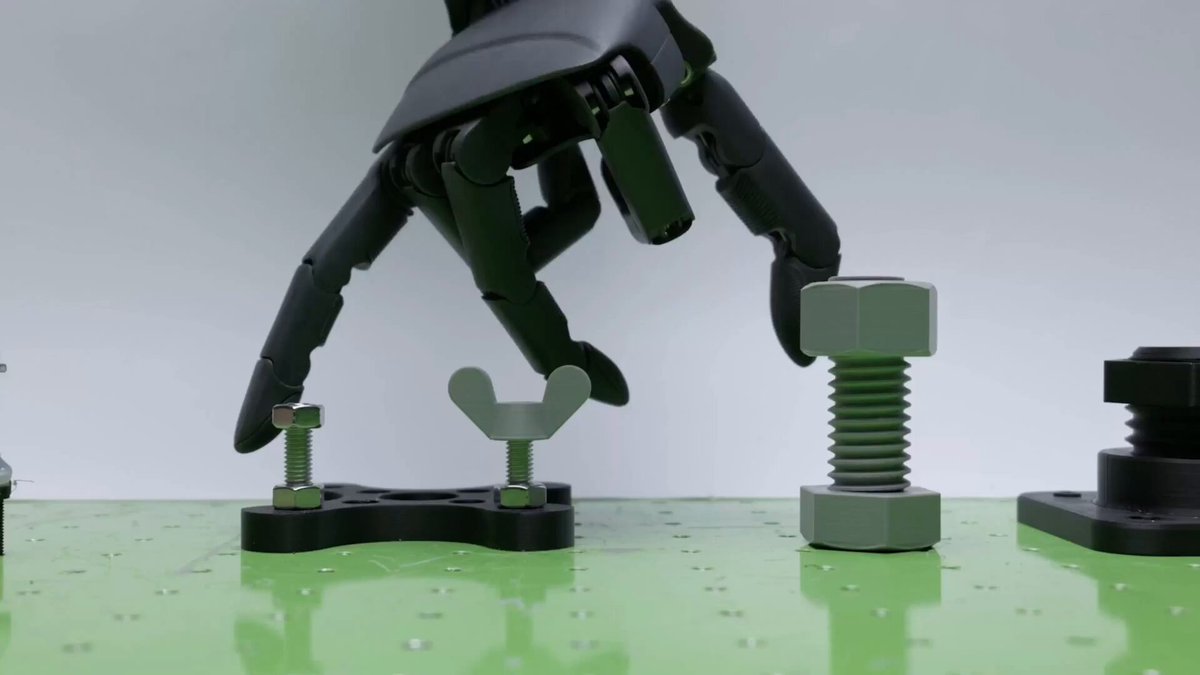
The LinkerBot compilation shared by TechniaHQRobot covers small-part handling, food manipulation and grasps on objects with different shapes. Those tasks draw attention to finger placement, contact and release, as well as how much force a hand can apply.
The shared compilation covers small parts, food and objects with varied shapes.
LinkerBot lists 6 active and 5 passive degrees of freedom for its O6 hand.
The O6 product page lists up to 70 N of five-finger grip force.
The O6 figures should not be assigned to every hand in the compilation.
Original X post
Open on XLoading the full X post…
What the shared footage covers
The post describes a compilation of LinkerBot hand work across several object types. A small part asks for a different contact arrangement from a larger object that sits across the palm. Food handling adds another reason to pay attention to where the fingers press.
I am most interested in the change between grips. Fingers that close around an object still have to reposition or release it without losing control of the next step. The compilation is a useful prompt to inspect that sequence in longer recordings.
Keep the 70 N figure tied to the O6
LinkerBot's current product page lists 6 active and 5 passive degrees of freedom for the O6, with a maximum five-finger grip force of 70 N. It lists tactile sensing as an option. These details describe that product configuration.
The number of independently driven motions differs from the total number of moving joints. A passive joint can move through mechanical coupling or contact without having its own motor command. That distinction helps explain why joint counts alone are a poor way to compare hands.
A maximum grip-force specification also leaves several questions open. How much force reaches each contact? What happens as the fingers move? How does performance change during repeated use? The specification does not answer those questions for the posted tasks.
Technical details
- Specification reference
- Linker Hand O6
- Active / passive DoF
- 6 / 5, according to LinkerBot
- Five-finger grip force
- Up to 70 N, manufacturer specification
- Tactile sensing
- Optional on the listed O6 configuration
Ask how the hand was controlled
A clip can show a completed motion while leaving the control method outside the frame. An operator, a stored sequence or a learned controller may produce similar visible movements over a short interval. The source post does not establish the method for every segment.
The same care applies to sensors. An optional tactile configuration on a product page does not confirm that a particular recording used touch feedback. That requires a description of the hardware fitted to the hand and the signals used by its controller.
A useful next recording would include the failed attempts
For a repeatability check, I would keep the full sequence from the initial approach to the final release. Move the object between trials, record every attempt and report drops, regrasping and operator intervention.
Those observations would help separate a hand's range of motion from its reliability on a task. The current compilation gives readers examples to examine. It provides no shared trial count or task-level success rate across the clips.
Verification notes
- O6 specifications were checked on LinkerBot's website on September 21, 2026 and may differ by version.
- No autonomy claim, universal model identity or success rate is inferred from the compilation.
Explore the technical topic
Share this article
Share the current TechniaHQRobot article page.
Sources
By @techniahqrobot
About the publication · Sources and editorial policy · Report a correction