

Introduction
AI robot pets combine animation, sensors and software to create the impression of a responsive companion. Sony aibo uses an articulated dog body with cameras, microphones and cloud-connected behavior. Casio Moflin focuses on touch, sound and a soft body rather than walking. KEYi Tech Loona uses wheels, a moving head and visual interaction. PARO is a therapeutic seal robot used in care settings. These products should not be placed in one ranking without considering their intended role.
The useful comparison is not which robot appears most alive in a short video. It is how the machine moves, what it senses, whether core behavior depends on an account or subscription, how personal data is handled and what support exists when the battery or actuator fails. A companion robot can provide play, routine and engagement. It is not a person, animal or medical professional, and claims about loneliness, therapy or emotional support require careful evidence.
Key findings
- Sony aibo offers the richest articulated pet behavior in this group, but its connected services, regional availability and ownership costs need to be checked before purchase.
- Casio Moflin avoids complex walking hardware and concentrates on touch, sound and gradually changing behavior inside a soft form.
- Loona uses a wheeled base, animated ears and screen-based eyes to deliver expressive interaction at a lower mechanical complexity than a legged robot.
- PARO belongs to a different category it is a therapeutic device used under care programs, not a general consumer robot dog.
- Microphones, cameras, cloud accounts and mobile apps create privacy and product-longevity questions that are as important as the robot's personality.
AI robot pets compared
| Robot | Body and movement | Primary interaction | Important ownership question |
|---|---|---|---|
| Sony aibo | Articulated quadruped with expressive head, legs and tail | Vision, voice, touch, learned routines and connected services | Regional service, subscription terms, battery and actuator repair |
| Casio Moflin | Soft stationary companion with internal movement and sound | Touch, holding, voice and changing emotional behavior | Cleaning, battery service, app dependence and behavior persistence |
| KEYi Tech Loona | Wheeled mobile robot with moving head, ears and display eyes | Vision, voice, gestures, games and app features | Cloud features, floor compatibility, camera privacy and spare parts |
| PARO | Soft seal-shaped therapeutic robot with limited internal motion | Touch, sound, light, posture and care-facilitated engagement | Clinical context, cleaning protocol, staff training and evidence |
| Simple robot dog toy | Motorized legs or wheels with fixed routines | Remote control, buttons or basic sound response | Do not confuse scripted behavior with adaptive AI |
What to inspect before buying
| Area | Concrete check | Why it matters |
|---|---|---|
| Core operation | Which features work without internet or subscription? | Cloud shutdown or account loss can remove behavior |
| Sensors | Are cameras or microphones always active and can they be disabled? | Determines privacy exposure in the home |
| Mobility | Which floors, thresholds and slopes are supported? | Small wheels or joints may fail on rugs and clutter |
| Battery | Runtime, charge method and replacement path | A sealed aging battery can end product life |
| Data | Where voice, images and profiles are processed or stored | A companion observes intimate domestic spaces |
| Support | Warranty region, repair center and spare-part availability | Expressive robots contain wear-prone actuators |
What counts as an AI robot pet
A robot pet becomes more than a motorized toy when it senses the environment, maintains state and changes behavior in response to people or experience. That can include face or object recognition, sound localization, touch sensing, navigation, reinforcement schedules and a persistent profile. The system may run some models onboard and use cloud services for speech or updates.
The term AI is broad. A robot can feel responsive through carefully designed animation and state machines without using a large generative model. That is not a weakness. Fast, predictable behaviors often produce better interaction than a slow cloud response. Buyers should look for documented functions rather than assume that an AI label means open-ended understanding.
Sony aibo articulated behavior and connected ownership
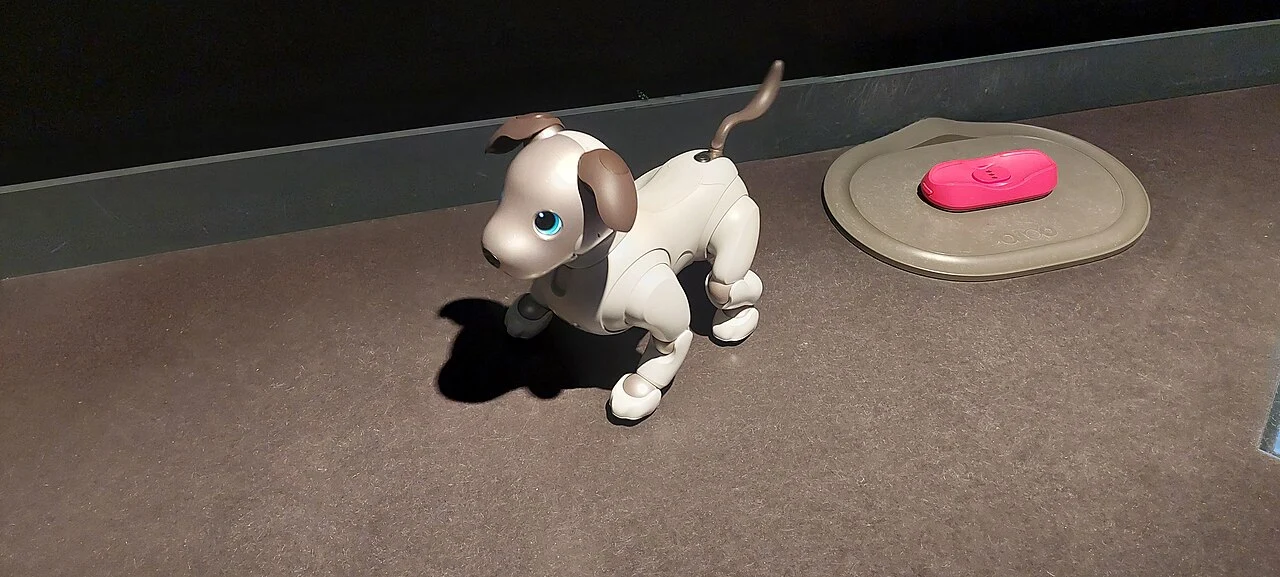
Sony's aibo uses a multi-joint quadruped body to walk, sit, turn its head and perform expressive motions. Cameras, microphones, touch sensors and joint control allow it to react to people and its surroundings. The product is designed to develop patterns of behavior over time and uses connected services as part of the experience.
The mechanical richness creates ownership obligations. Legs, neck joints and the battery experience repeated cycles. Availability and service differ by region. Prospective owners should verify the current purchase channel, network plan, cloud service terms, warranty and repair process. An imported unit may not receive the same support as one sold in its intended market.
Casio Moflin expression without locomotion
Moflin takes a different approach. Its soft body is intended to be held, stroked and spoken to. Internal movement and vocal sounds communicate changing states. By removing walking, mapping and obstacle avoidance, the design can focus on tactile interaction and a compact physical presence.
The limitation is equally clear Moflin does not follow a person through the house or perform mobile tasks. Its value depends on whether the user enjoys repeated touch-and-response interaction. Cleaning instructions matter because the outer surface is handled frequently. Buyers should also confirm battery servicing, charging behavior and how personality data is retained or transferred.
Loona mobile character on wheels
Loona uses a wheeled chassis rather than legs. A moving head, ear mechanisms and animated display eyes create readable gestures while cameras and microphones support perception and voice interaction. Wheels reduce the actuator count needed for locomotion and can provide lively motion on smooth floors.
Small mobile robots still face ordinary household obstacles. Thick rugs, thresholds, cables and stairs constrain movement. A front camera in a domestic device raises privacy questions, especially when remote viewing or cloud recognition is involved. Review account controls, recording indicators, data deletion and which functions remain available when the service is offline.
PARO and therapeutic use
PARO is modeled as a baby harp seal and is used in healthcare and elder-care contexts. It responds to touch, sound, light and handling through internal sensors and motion. The unfamiliar animal form can reduce direct comparison with a real household pet while still inviting nurturing interaction.
Therapeutic use should be distinguished from consumer entertainment. Outcomes depend on the person, care setting, session design and staff. A device should not be described as treating a condition unless that claim is supported for the exact use. Facilities must also consider infection control, cleaning, consent, supervision and whether the robot complements rather than replaces human contact.
How robot pets create emotional expression
Designers combine motion timing, gaze direction, sound, posture and response delay to make internal state legible. A head tilt after a voice, a slower movement when inactive or a repeated greeting can lead people to attribute intention. Persistent preferences and recognition strengthen that effect.
This emotional reading is produced jointly by the machine and the person. The robot may classify a face or track interaction frequency, but it does not establish that it experiences affection. Honest product evaluation can appreciate expressive design without making unsupported claims about consciousness or feelings.
Privacy inside the home
A companion robot can encounter bedrooms, children, conversations and visitors. Cameras used for navigation may also support photos or remote viewing. Microphones used for wake words may send audio to cloud services. The privacy policy should identify data categories, processing locations, retention, account deletion and third-party sharing.
Practical controls matter more than a long policy alone. Look for physical camera shutters or clear indicators, microphone mute, local-only modes, child account settings and access logs. Use a unique password and multi-factor authentication when offered. Place the charging station where the robot does not continuously face sensitive areas.
Subscriptions, cloud dependence and product life
Connected behavior may depend on a recurring plan that covers cloud processing, storage or mobile access. The purchase decision should separate functions included permanently from features that stop when the plan ends. Record the annual cost and the consequences of service cancellation.
Cloud dependency also creates end-of-life risk. A perfectly working body can lose voice or recognition features if servers close. Manufacturers can reduce this risk through local processing, exportable data and a documented offline mode. Buyers should prefer clear commitments over assumptions that a popular feature will remain online indefinitely.
Battery, cleaning and repairability
Robot pets are handled more often than many appliances. Fur-like covers collect dust and oils. Wheels and joints collect hair. Cleaning methods must protect microphones, touch sensors and moving parts. Therapeutic environments may require stricter disinfection procedures than a consumer product can tolerate.
Battery replacement is a major longevity test. Ask whether the battery is user-replaceable, service-replaceable or sealed without a published path. Confirm repair centers and parts for legs, wheels, displays and charging docks. A robot designed for attachment should have a credible support plan when wear occurs.
Choosing a companion robot for a real user
Match the body to the interaction. Choose articulated mobility when walking and pet-like movement justify the cost and maintenance. Choose a soft stationary design when touch and holding are central. Choose a wheeled character for games and expressive room-scale movement on compatible floors. Use a therapeutic robot only within an appropriate care plan.
Observe the intended user over several sessions when possible. Initial novelty can hide whether the interaction remains meaningful. Track setup burden, false responses, charging reminders and frustration. The right robot fits a routine without pretending to replace relationships, animals or professional care.
Limitations and missing information
- Companion behavior can be scripted or state-based even when marketed as AI; published details rarely reveal every model or decision rule.
- Cloud services and subscriptions can remove features or increase long-term cost.
- Cameras and microphones collect data in private spaces and require deliberate account and device settings.
- Expressive motion encourages anthropomorphism but does not demonstrate feelings or consciousness.
- Small wheels and articulated joints are vulnerable to rugs, cables, drops, hair and repeated wear.
- Therapeutic outcomes cannot be generalized from a product demonstration to every person or care setting.
Conclusion
Choose an AI robot pet by the interaction it can sustain and the ownership model behind it. Aibo provides complex physical expression. Moflin centers touch. Loona delivers animated mobile character on wheels. PARO serves structured therapeutic settings. Privacy, repair, battery service and cloud continuity determine whether the companion remains useful after the novelty fades.
Frequently asked questions
What is the best AI robot pet in 2026?
There is no single best model. Aibo suits buyers seeking articulated dog-like motion, Moflin emphasizes touch, Loona offers wheeled interactive play and PARO is designed for therapeutic settings.
Do AI robot pets have feelings?
They can model states and produce expressive behavior, but this does not establish subjective feelings or consciousness. Their responses come from sensors, software and designed animation.
Can a robot pet replace a real pet?
A robot avoids feeding, allergies and veterinary care, but it does not reproduce a living animal's needs or relationship. It is a different type of companion product.
Are robot pets useful for emotional support?
Some users may find routine and engagement helpful, and therapeutic robots such as PARO are used in care contexts. Benefits depend on the person and setting and should not be presented as guaranteed treatment.
What privacy risks do robot pets create?
Models with cameras, microphones, accounts and cloud processing may capture household data. Review controls, retention, deletion, remote access and offline operation.
How long does a robot pet last?
Longevity depends on battery service, actuator wear, cleaning, spare parts and continued software support. Confirm the repair path before purchasing.
Sources and methodology
The AI robot pet review was refreshed on July 23, 2026 using Sony, Casio, KEYi Tech. Any quoted price or availability remains tied to country, configuration, tax, shipping, software and support conditions published by the seller.
Performance claims for AI robot pet remain attributed to the named manufacturer or institution unless a separate test reproduces them. Unpublished payload, runtime, accuracy or service data is left blank.
Related TechniaHQRobot guides
Share this article
Share the current TechniaHQRobot article page.
Continue reading
Open the latest robotics reporting, Physical AI analysis and hardware notes.